Why Traditional Financing Falls Short for Industrial Suppliers
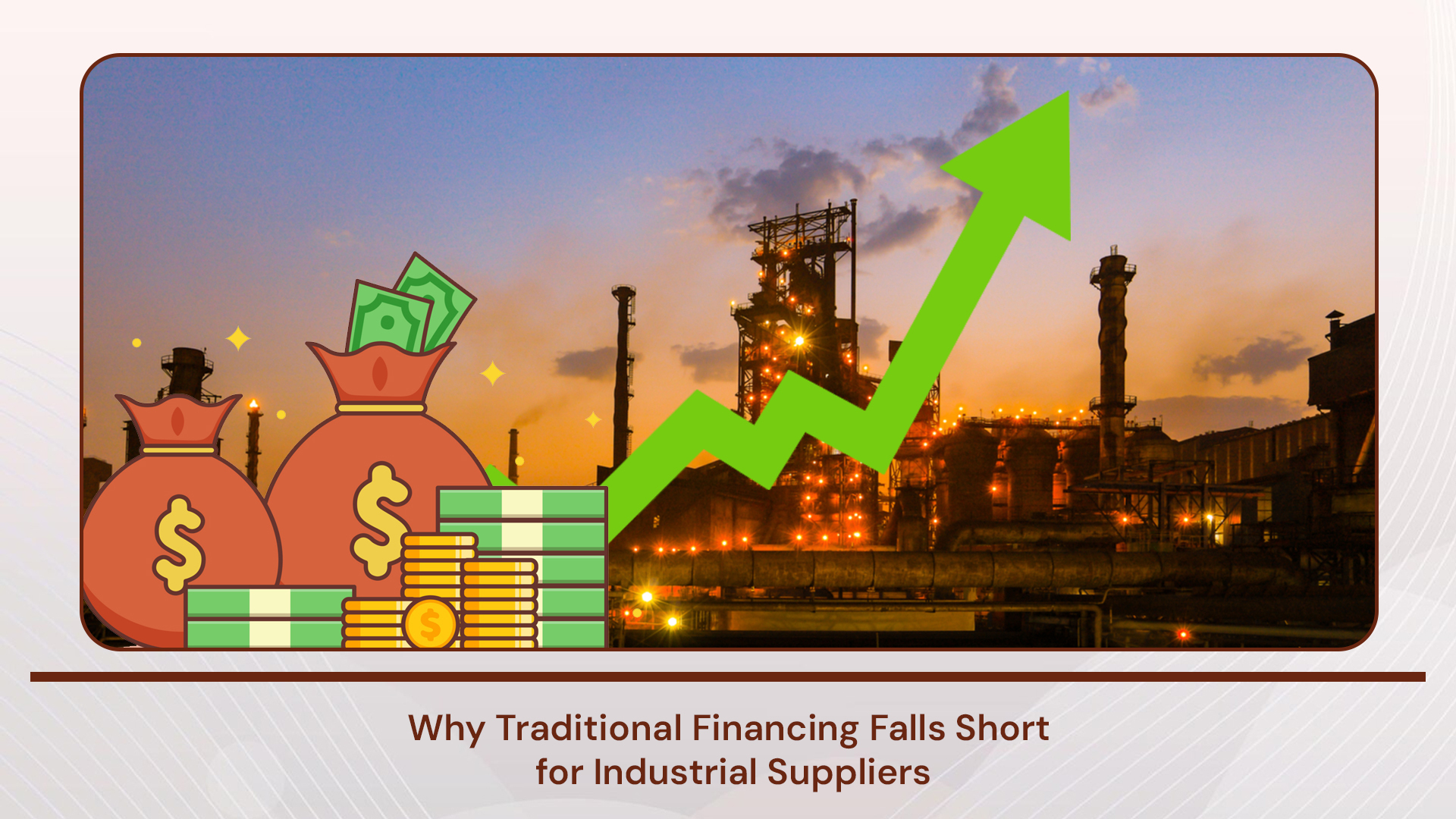
Industrial suppliers typically encounter huge difficulties when applying for conventional financing options. The traditional methods might be too strict and thus, it would be hard for such businesses to get the required funds that would help them run their operations smoothly.
Financing Solutions, Metal Industry, Working Capital, Credit
The drawbacks of traditional financing methods are most pronounced in the metal industry where the suppliers might be experiencing cash flow challenges because of the long payment periods and the high operational costs. Consequently, a significant number of industrial suppliers are left looking for alternative sources of financing in order to survive.
New financing methods are very important now that traditional methods have failed to meet the needs of industrial suppliers.
Key Takeaways
Industrial suppliers are often constrained by traditional financing options.
The metal industry is confronted with specific challenges owing to long payment periods and high operational costs.
Alternative financing solutions are becoming more and more important.
Industry suppliers require flexible financing solutions in order to handle cash flow management efficiently.
Looking for new financing sources is so important for the development and sustainability of industrial suppliers.
The Unique Financial Challenges of Industrial Supplier
The financial issues faced by industrial suppliers are such that they have a direct impact on their working capital and consequently their overall business stability. Being financially stable means that a supplier can manage his financial position very well and thus can survive or even grow in a competitive market.
Inventory-Heavy Business Models
One of the significant challenges is maintaining an inventory-heavy business model. Industrial suppliers need to stock a wide range of products to meet customer demands, which ties up a substantial amount of capital.
“The key to managing inventory is not just about having the right products but also about having the right financing options to support inventory purchases.”
Long Sales Cycles and Payment Terms
Notwithstanding, long sales cycles and long payment terms are additional challenges. Industrial suppliers, as a rule, wait for their customers to pay for a period of time from 30, 60 to even 90 days, and this can be a great strain on their working capital. This time lag can negatively impact their capacity to place new orders or put money into business development.
Demand Fluctuations by Season
Demand fluctuations by season are another factor that directly impacts the financial viability of industrial suppliers. They have to be able to cope with the ups and downs of demand since this will directly affect their cash flow and working capital management. The provision of effective and alternative financing options will smooth out these fluctuations.
If industrial suppliers are aware of the financial challenges that are peculiar to them, they will be able to more easily navigate through the business complexities and take advantage of alternative financing sources to meet their working capital needs.
Cumbersome Bank Loans: A Square Peg in a Round Hole
The universal approach of cumbersome bank loans does not fit the ever-changing industrial suppliers' business model at all. These enterprises frequently need cashflow that is so flexible that it can be adjusted to their particular difficulties, such as the capital tied up in inventory and the long period of sales.
Stringent Qualification Requirements
Generally, traditional banks have very tough qualification criteria which can be a great challenge for industrial suppliers. These usually consist of a comprehensive credit history, large amounts of collateral, and a solid financial position. For a lot of suppliers, particularly smaller ones or those that have just started, these conditions can act as a very big obstacle to getting the financing they need.
Lengthy Approval Processes
The approval process for traditional bank loans can be notoriously slow, often taking weeks or even months. This delay can be detrimental to industrial suppliers who need to respond quickly to new opportunities or manage unexpected expenses. The lengthy process can hinder their ability to compete effectively in the market.
Inflexible Repayment Structures
Bank loans still generally have inflexible repayment structures where the repayments are based on a predetermined schedule and they do not adapt to the ever-changing cash flows which are typical in the industrial supply industry. The suppliers might find it difficult to cope with the fixed repayment schedule when their sales are low or when the customers are late in making their payments.
To conclude, traditional bank loans might be the right choice for some companies; however, they are not capable of solving the specific financial problems that industrial suppliers have. The application process and the requirements of the bank loans are so strict that they can even cause the suppliers to lose their ability to grow and prosper.
The Working Capital Gap in the Metal Industry
The working capital situation in the metal industry is quite extraordinary and can even affect its financial stability to a very significant extent. The companies in this sector have to deal with a very complicated situation consisting of raw material cost volatility, capital-intensive equipment needs, and cash flow timing mismatches.
Raw Material Cost Volatility
One of the key problems facing the metal industry is the volatility in the price of raw materials. These price variations can be extreme and may not be easy to predict, hence they impact the entire price structure of the metal products.
Capital-Intensive Equipment Needs
The metal industry is one of the few industries that largely depends on heavy machinery and equipment that require huge financial investments. This equipment is indispensable for the production process, but at the same time, it poses a very substantial cost that has to be paid at once.
Cash Flow Timing Mismatches
Timing mismatches in cash flow happen when a company's receipt of payments from its clients does not coincide with the company's need to pay its suppliers or cover its operational expenses. In the metal sector, this problem can become more serious because of the long production cycles and the prolonged payment terms.
Why Lines of Credit Are Still Not Enough
Credit lines, while being useful, can often prove to be limiting for industrial suppliers because of the numerous weaknesses that come along with them.
Credit Limits Not Enough
A major concern with credit lines is often the case that they are usually attached to credit limits that are not enough.
Covenants and Conditions Are Restrictions
Usually, the credit lines are accompanied by covenants and conditions that restrict the company's operations and at the same time limit its flexibility.
Personal Guarantee Requirements
Many lines of credit require personal guarantees from business owners. This means that if the business defaults on the loan, the owner's personal assets are at risk.
The Hidden Costs of Traditional Financing Solutions
Beyond the surface, traditional financing harbors hidden costs that can strain the financial health of industrial suppliers.
Opportunity Costs of Delayed Funding
One of the significant hidden costs is the opportunity cost associated with delayed funding.
“The biggest risk is not taking any risk... In a world that's changing really quickly, the only strategy that is guaranteed to fail is not taking risks.” — Mark Zuckerberg
Penalties and Fee Structures
Traditional financing often comes with complex fee structures and penalties that can add up quickly.
Impact on Business Growth Potential
The hidden costs of traditional financing are directly linked to an industrial supplier's growth potential.
Financing Innovations, Metal Industry, Working Capital, and Credit Alternatives
Invoice Factoring and Accounts Receivable Financing
Benefits of Invoice Factoring:
Immediate access to cash
Improved working capital
Reduced risk of late payments
Purchase Order Financing
Purchase order financing is a financing option that allows businesses to fulfill large orders without having the necessary capital upfront.
Equipment Leasing and Financing
Equipment leasing and financing enable businesses to acquire necessary equipment without a significant upfront cost.
Inventory Financing Options
Inventory financing allows businesses to use their inventory as collateral to secure a loan.
Financing Options Comparison Table
| Financing Option | Description | Benefits |
|---|---|---|
| Invoice Factoring | Immediate payment on outstanding invoices | Improved cash flow, reduced risk |
| Purchase Order Financing | Financing for large orders | Fulfill orders without upfront capital |
| Equipment Leasing | Acquire equipment without upfront cost | Preserve working capital |
| Inventory Financing | Use inventory as collateral | Access capital, manage inventory |
Supply Chain Financing: Bridging the Gap
Collaborative Financing Models
This strategy permits suppliers to make financiers agree on better terms and thus consolidate their financial position.
Early Payment Discount Programs
Boards that partake in such transactions will get discounts on their purchases.
Technology-Driven Financing Innovations
Fintech Solutions for Industrial Suppliers
Quick access to capital
Flexible repayment terms
Enhanced cash flow management
AI-Powered Credit Assessment
AI-powered systems analyze vast datasets to provide more accurate credit evaluations.
Blockchain Applications in Supply Chain Finance
Blockchain technology is being increasingly applied to supply chain finance.
Case Studies
Metal Fabricator Overcomes Seasonal Cash Flow Challenges
Improved cash flow stability
Enhanced ability to meet customer demands
Reduced financial stress
Industrial Tool Supplier Expands with Alternative Financing
Acquired new equipment without upfront costs
Expanded product line
Achieved a 25% increase in revenue
How a Steel Distributor Optimized Working Capital
Improved working capital management
Enhanced supplier relationships
Reduced cash conversion cycle
Conclusion: Choosing the Right Financing Path for Your Industrial Supply Business
Industrial supply businesses face unique financial challenges that traditional financing options often fail to address. Alternative financing solutions offer more flexible approaches to managing working capital and supporting growth.
By understanding these options and selecting the right financing path, industrial supply businesses can optimize cash flow, strengthen operations, and drive long-term success in a competitive market.