Union Budget 2026: What It Means for Metal Distributors and Fabricators
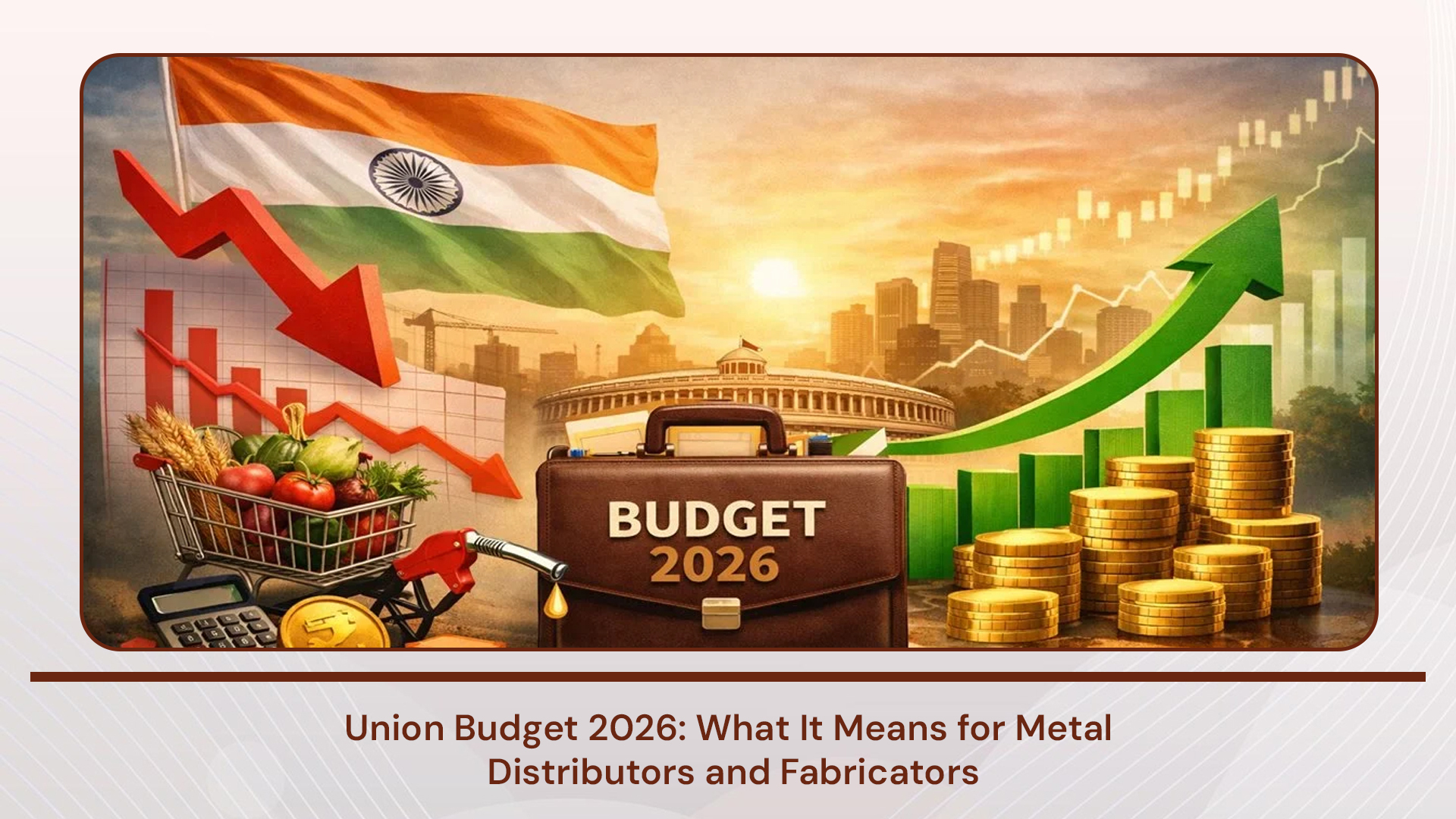
Finance Minister Nirmala Sitharaman presented Union Budget 2026 on February 1, 2026, outlining ambitious infrastructure plans and sector specific initiatives that will directly impact the metal industry. For businesses in metal distribution and fabrication, this budget brings significant opportunities across infrastructure, clean energy, and advanced manufacturing sectors.
The budget's focus on infrastructure led growth, decarbonisation, and domestic manufacturing creates immediate demand opportunities for metal suppliers, fabricators, and precision component manufacturers. Understanding these announcements helps position your business to capture upcoming projects and procurement opportunities.
Record Infrastructure Spend: ₹12.2 Lakh Crore Capital Expenditure
The government raised capital expenditure to ₹12.2 lakh crore for financial year 2026-27, marking a 9% increase from the previous year's ₹11.2 lakh crore allocation. The current infrastructure investment of ₹2 lakh crore which started in 2014-15 has increased to present day levels. The current funding allocation will support the construction of roads and railways and ports and high speed rail corridors. Each of these projects requires substantial quantities of structural steel rebar girders rails fasteners and fabricated metal components. The overall spending volume creates continuous demand which will last for multiple years.
The construction industry will experience consistent volume increases for all construction grade materials which metal distributors supply. Large infrastructure projects create long procurement cycles which enable suppliers to organize their capacity and logistics. The projects for rail and roads and ports establish a need for both warehousing facilities and metal assembly operations at construction sites.
Metal fabricators should prepare for increased orders of custom structural components mounting brackets support systems and specialized assemblies. Infrastructure projects require certified suppliers who can deliver both quality products and dependable delivery schedules.
The budget also announced an Infrastructure Risk Guarantee Fund to provide partial credit guarantees to lenders financing infrastructure projects. The purpose of this initiative is to increase private sector involvement by decreasing financial hazards that exist during construction periods. More private investment means more projects and greater metal demand.
Steel Sector Decarbonisation: ₹20,000 Crore CCUS Allocation
The budget allocated ₹20,000 crore specifically for Carbon Capture, Utilization and Storage technology which targets decarbonising carbon intensive sectors that include steel and cement and power and refineries. This funding serves as direct financial support to enable steel industry evolution toward environmentally friendly production techniques.
CCUS implementation requires substantial financial resources to acquire new equipment while making plant modifications and conducting technology upgrades. Steel producers will require specific metals and alloys which they need for their carbon capture systems and storage infrastructure and monitoring equipment. This situation establishes business opportunities for suppliers who provide high grade materials and precise components.
The focus on decarbonisation will create increased market demand for waste heat recovery systems and hydrogen ready burners and sensors and instrumentation and ancillary equipment. Fabricators who have pressure vessel and piping system and industrial assembly expertise should establish themselves to meet requirements of this new market.
Major public sector steel companies like Steel Authority of India Limited will likely issue tenders for retrofit projects and new low carbon production units. The projects need comprehensive supplier networks to provide equipment and installation services and continuous maintenance support. Small and medium suppliers can find opportunities as second tier vendors which support larger engineering and procurement and construction firms.
The green steel transition also creates demand for scrap processing equipment and facilities. The Indian Steel Association has advocated for greater scrap usage in green steel production which will require investment in collection sorting and processing infrastructure.
Semiconductor Push: ₹40,000 Crore for India Semiconductor Mission 2.0
The government established India Semiconductor Mission 2.0 with a budget of ₹40,000 crore after completing the first project. The program aims to develop semiconductor equipment, create manufacturing materials, and improve national semiconductor supply chain capabilities. The Ministry of Electronics and Information Technology received approximately ₹21,633 crore with emphasis on artificial intelligence and semiconductor development.
Semiconductor production depends on successful operation of all system components since manufacturing demands absolute accuracy. Fabrication facilities require precision fixtures and lead frames together with specialty foils and cleanroom compatible metal assemblies and high tolerance machined parts. The components must fulfill demanding quality requirements which surpass standard industrial performance benchmarks.
The government incentive program to develop domestic semiconductor fabrication facilities and their supporting operations generates new business requirements for precision metalworking. Companies that can manufacture semiconductor industry compliant CNC machined components and EDM parts and electro polished assemblies will experience increased market chances.
Metal distributors should consider stocking specialty alloys and materials used in electronics manufacturing. High purity metals and controlled expansion alloys and materials with specific electrical or thermal properties serve this sector. Building relationships with semiconductor equipment manufacturers and facility builders positions suppliers for long term growth.
The budget establishes government funding support for tool room development at central public sector enterprises which will improve national precision component manufacturing abilities. The construction of this facility requires immediate procurement of tooling equipment and ongoing material needs which will continue throughout the project.
Clean Energy Expansion: Solar, Storage, and Battery Manufacturing
The budget allocated funds to provide duty exemptions and tax benefits for solar energy and energy storage equipment while it required the domestic production of solar panels and battery systems and electrical grid protection systems. The solutions enable faster implementation of clean energy systems while decreasing the need for foreign energy products.
Solar installations require large quantities of metal materials for their operations. The system needs large amounts of metal materials for its mounting structures and racking systems and cable trays and inverter enclosures. Domestic assemblers benefit from customs exemptions which decrease their input expenses, thus enabling them to finish projects faster and handle more work.
Battery manufacturing creates demand for specialized metal components including enclosures, current collectors, busbars, and conductive elements. Energy storage needs to maintain grid stability, so manufacturers require suppliers who possess expertise about battery system requirements for thermal management and electrical isolation and safety standards.
The renewable energy sector provides metal suppliers with high volume potential through their aluminum mounting systems and galvanized steel racking and copper busbars. Fabricators need to acquire knowledge about solar and storage systems to understand their installation needs and their compatibility with existing standards.
The switch to renewable energy sources increases the need for electrical system components. The electrical grid requires switchgear housings and transformer enclosures and cable management systems and distribution equipment to meet its growing demand for metal materials needed to support new distributed generation systems.
Rare Earth Corridors and Critical Minerals
The budget announced establishment of rare earth corridors in Andhra Pradesh, Odisha, Kerala, and Tamil Nadu. These corridors aim to develop domestic rare earth elements supply chains for high tech industries including electric vehicles and electronics. The government also announced exemption of basic customs duty on capital equipment for critical minerals processing.
Rare earth extraction and processing requires specialized equipment resistant to corrosive chemicals and high temperatures. Mining operations need structural components, processing vessels, piping systems, and material handling equipment built to demanding specifications.
Setting up permanent rare earth magnet manufacturing facilities creates demand for precision manufacturing equipment and cleanroom infrastructure. Suppliers of stainless steel, exotic alloys, and corrosion resistant materials should monitor these projects for procurement opportunities.
The focus on critical minerals strengthens India's position in global supply chains for advanced technologies. Metal businesses that develop expertise in materials and components for critical mineral processing position themselves in a strategic growth sector with long term government support.
Manufacturing and Production Linked Incentive Expansion
The budget reinforced support for manufacturing through continued Production Linked Incentive schemes and capital goods development. Emphasis on establishing high tech tool rooms, supporting local capital goods production, and encouraging precision component manufacturing creates opportunities across the metal supply chain.
Tool rooms require precision cutting tools , fixtures, jigs, and inspection equipment. As new facilities come online, demand grows for high quality tool steels, carbide materials, and specialized alloys used in precision machining.
Capital goods manufacturing involves heavy metalworking including castings, forgings, and machined assemblies. Suppliers who can meet quality certifications under PLI programs gain access to government supported projects with stable, long term demand.
The budget also announced a ₹10,000 crore fund to develop champion small and medium enterprises. This funding helps smaller metal fabricators and component manufacturers upgrade equipment, improve quality systems, and scale production to serve larger customers.
Trade Policy and Tariff Changes
Market participants focused attention on potential customs duty changes affecting metal inputs. Discussion around the 2.5% basic customs duty on coking coal particularly interested steel producers, as any reduction would lower production costs for companies like Tata Steel, Jindal Steel, JSW Steel, and SAIL.
The Aluminium Association of India requested uniform 15% basic customs duty on all aluminium products, up from the current 2.5% to 10% range, to prevent India from becoming a dumping ground for imports. Any such changes would affect pricing dynamics and competitiveness of domestic aluminium suppliers.
Metal businesses should monitor customs notifications closely. Tariff changes on raw materials directly impact supplier margins and buyer sourcing preferences. Understanding these shifts helps adjust pricing strategies and inventory decisions.
The budget's customs relief for solar and storage components affects suppliers serving clean energy sectors. Lower import duties on certain finished goods might increase competition, while duty exemptions on capital equipment for domestic manufacturing could support expansion of local production capacity.
Practical Opportunities for Metal Businesses
Budget announcements bring valuable insights, yet businesses need to implement particular steps for their development. Metal distributors and fabricators should consider these strategic moves.
The budget will create procurement announcements through its infrastructure project funding during the next several months. Identifying specific corridors, rail lines, and port developments lets you pre position inventory and supplier relationships in relevant regions. Large projects prefer suppliers with verified capacity, quality certifications, and proven logistics capabilities.
Creating specialized product categories for emerging sectors makes your business more visible to buyers in those markets. The company should develop dedicated equipment solutions for decarbonization and precision semiconductor components and solar mounting systems and battery enclosure systems. Buyers searching for these specific solutions will find suppliers who clearly serve their needs.
Building relationships with engineering, procurement, and construction firms working on government projects creates channels into large tenders. EPCs need extensive vendor networks and often welcome qualified suppliers who can demonstrate relevant experience and capacity.
Your company should obtain relevant certifications, which will enhance your ability to attract government and large corporate clients. ISO standards, industry specific quality certifications, and supplier approval status with major companies all increase your competitiveness for significant projects.
Organizations track tender portals from public sector companies to discover upcoming business opportunities. SAIL and BHEL together with other central public sector enterprises frequently publish their procurement needs.Early awareness lets you prepare proposals and connect with decision makers before final specifications lock in.
Developing technical expertise in emerging areas positions your business ahead of competitors. Understanding CCUS system requirements, semiconductor cleanroom standards, or solar installation specifications helps you serve these growing markets more effectively.
Sector Specific Impact Summary
The infrastructure allocation directly benefits suppliers of construction grade steel, rebar, structural shapes, and fabricated assemblies. Project based demand provides visibility for capacity planning and inventory management.
Steel sector decarbonisation creates new markets for specialized alloys, pressure vessels, piping systems, and instrumentation. Companies with capabilities in high specification fabrication find opportunities in retrofit and new facility projects.
Semiconductor manufacturing drives demand for ultra precision components, specialty materials, and cleanroom compatible assemblies. This high value sector rewards suppliers who meet exacting quality and traceability requirements.
Clean energy expansion increases volume requirements for aluminium mounting systems, galvanized steel structures, copper busbars, and electrical enclosures. Standardization in solar and battery sectors supports efficient production and inventory management.
Rare earth and critical minerals development needs corrosion resistant materials, processing equipment, and specialized infrastructure. Early positioning in this strategic sector offers long term growth potential.
Manufacturing and PLI expansion strengthens demand for tool steels, precision castings, forgings, and machined components across capital goods production.
Looking Ahead
Union Budget 2026 sets the framework for significant metal industry growth over the next several years. The combination of infrastructure spending, industrial decarbonisation, advanced manufacturing support, and clean energy expansion creates diverse opportunities across metal distribution and fabrication.
Success requires more than passive observation of these trends. Businesses that actively position themselves through capability development, relationship building, certification pursuit, and market monitoring will capture disproportionate share of emerging opportunities.
The scale of announced spending and policy support makes this an opportune time for metal businesses to invest in growth. Whether expanding product lines, upgrading equipment, pursuing new certifications, or entering new market segments, the budget provides clear signals about where demand will concentrate.
For metal distributors and fabricators using platforms like Metalbook, these budget provisions create practical pathways to connect with buyers in high growth sectors. Digital tools that streamline supplier discovery, capability verification, and transaction processing become increasingly valuable as project volumes and complexity grow.
The next few years will reward metal businesses that understand these opportunities and take concrete steps to serve the sectors receiving government focus and funding. The framework is clear, the allocations are substantial, and the opportunities are real.