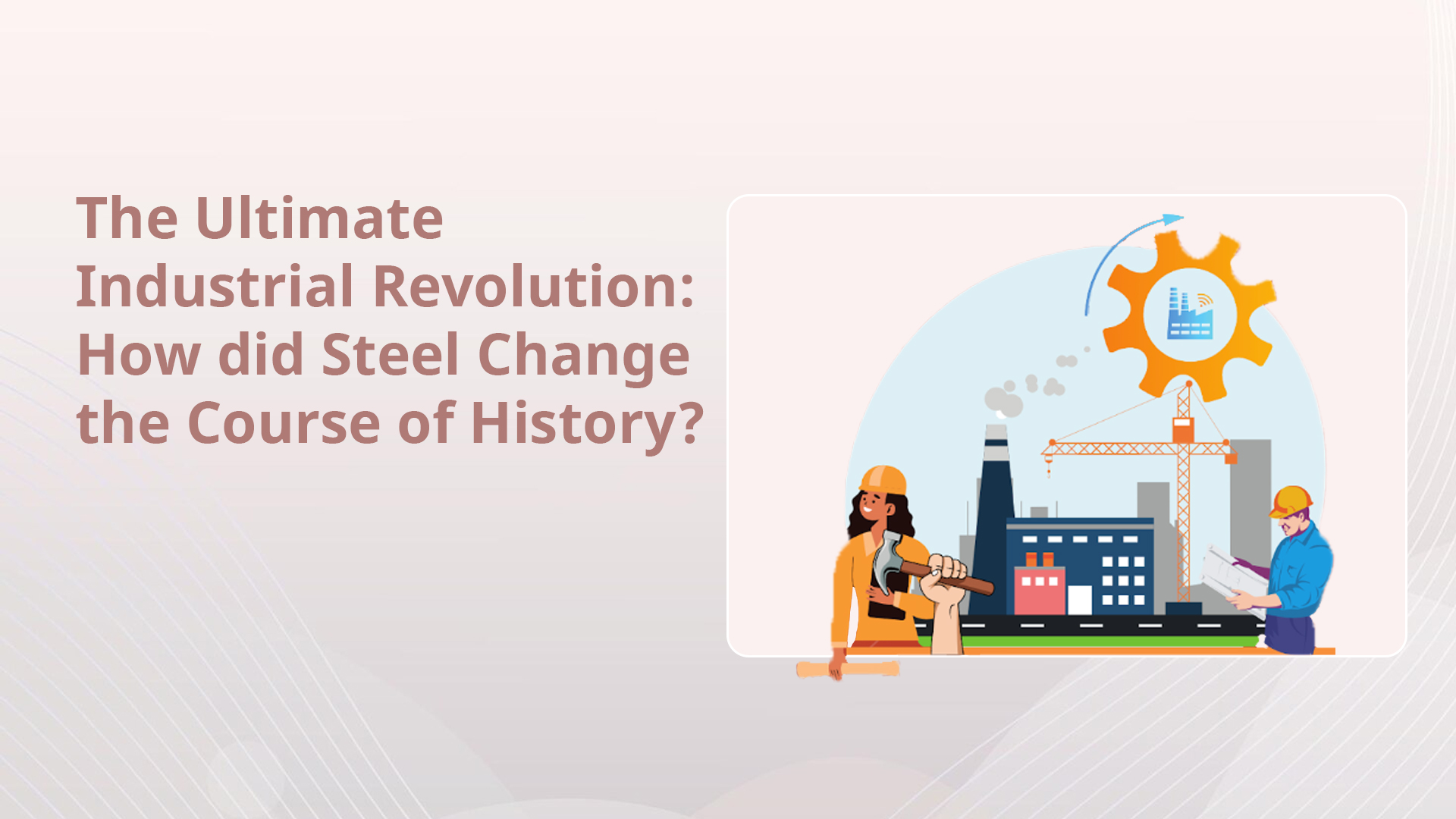
The Ultimate Industrial Revolution: How did Steel Change the Course of History?
Steel and the Industrial Revolution
The global economy has expanded by massive amounts over the last three centuries, and steel has played a critical role in this expansion. But have you ever come across its origin? Steel has been around for thousands of years, but the industrial revolution only enabled for large-scale manufacture of steel in the nineteenth century. This enabled the construction of bridges, trains, and other infrastructure that facilitated additional economic growth.

The First Industrial Revolution
Discovery of fuel source- Coal
An important discovery along the way was that the amount of carbon in the iron regulated not just its melting point but also its characteristics. By regulating the carbon additions with coke, a type of iron known as steel was created that could be cast on an industrial scale. Steel was far superior to iron because it was stronger, harder, and less brittle. Steel is also far more robust and easily recyclable. This made large-scale industrial manufacturing and building considerably more cost-effective.
The transition from Iron to Steel
These crucial breakthroughs enabled the iron and steel industry to thrive. This was notably noticeable on railways, where the strength of wrought iron rails limited the speed, weight, and number of train traffic. Steel has so positively revolutionized the transportation sector due to its greater strength and durability, as well as its ability to handle increasingly heavy and quicker cars and engines.
This resulted in the proliferation of numerous additional manufacturing activities reliant on steel and/or transportation. It is safe to conclude that iron and steel effectively fueled the industrial revolution. Europe, and particularly Britain, was the hub of this revolution, owing to their abundant supply of coal and iron ore. Because of the availability of these raw materials, combined with the development of new technologies such as the steam engine, Europe was able to construct a more efficient manufacturing process and become the world's leading industrial power. As a result, the economy grew stronger, transportation networks improved, and the manufacturing base expanded.
After 1890, the Bessemer process was gradually phased out in favor of open-hearth steelmaking. In the twentieth century, the crucible process improved the manufacture of high-quality alloy steel even further. We now have improved steel production procedures that allow us to create steel in big quantities and of exceedingly high quality. This has allowed us to meet the growing demand for steel in a range of industries. Steel is without a doubt one of the most essential elements in the modern world, and it is no surprise that the discovery of the Bessemer process has transformed the steel industry. India is a major producer and user of steel in the globe. Steel is both robust and recyclable, making it an excellent alternative for propulsion.
Frequently asked questions