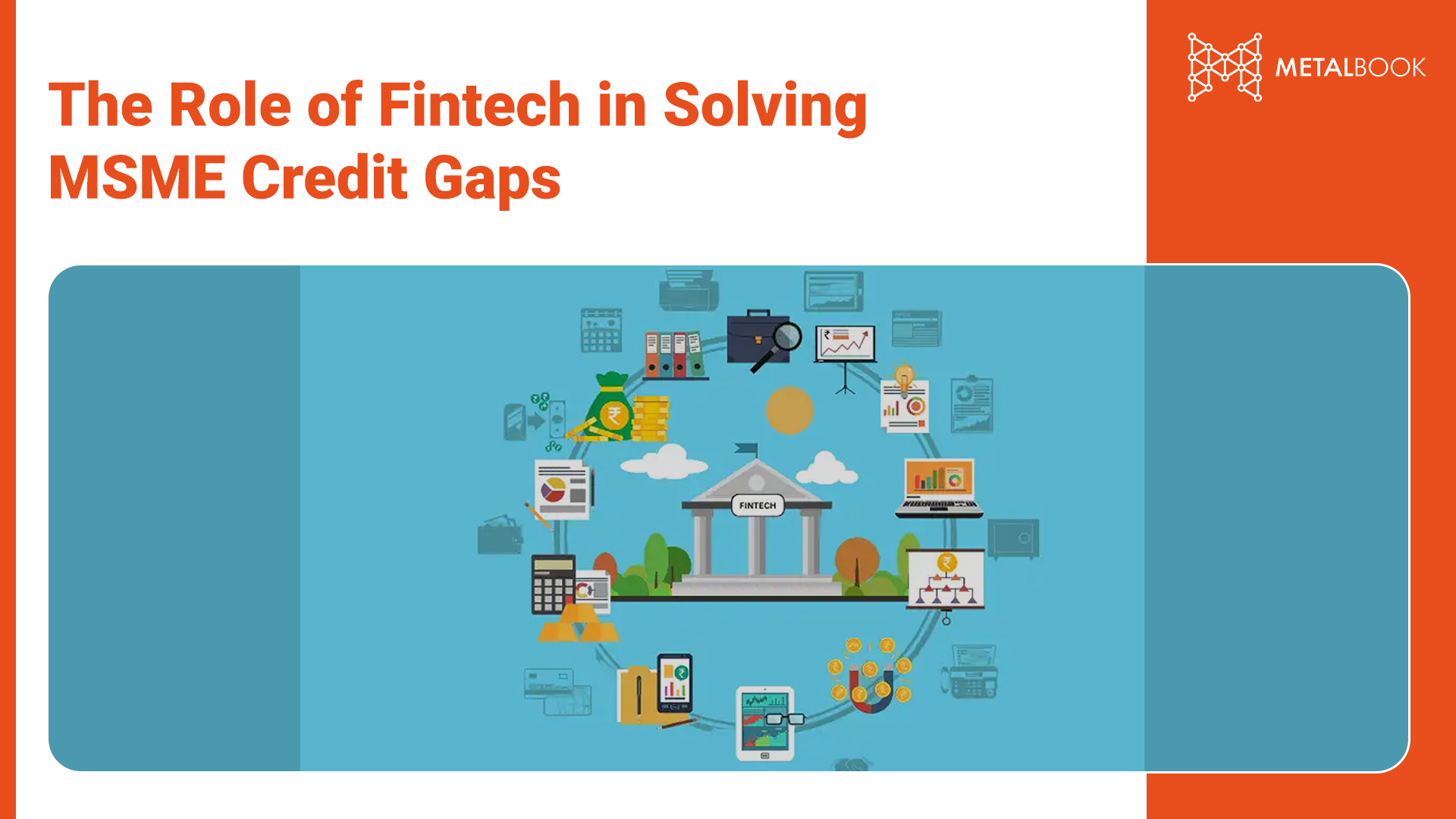
The Role of Fintech in Solving MSME Credit Gaps
The Micro, Small, and Medium Enterprises in India help the economy by contributing 30% of GDP while creating 26 crore jobs and generating 46% of the country's exports. The impressive statistics hide a serious underlying problem. The recent SIDBI-Crisil reports show that MSMEs face a credit gap which reaches ₹30 lakh crore. The government has introduced specific programs and credit availability has increased yet borrowers still face difficulties in obtaining necessary funds from formal lenders.
Banks have faced challenges when trying to serve these customers throughout their entire history. The majority of MSMEs cannot obtain formal financing because banks require them to provide expensive collateral while facing delays during the approval process and banks maintain their practice of making safe lending decisions. Fintech companies use advanced technologies to create new methods for small businesses to obtain funding which fulfills the current market need.
Understanding the MSME Credit Gap
The scale of the problem is staggering. NITI Aayog reported that FY21 only provided 19% of MSME credit demand through formal channels whereas the remaining credit demand reached ₹80 lakh crore. The MSME sector in India has a credit penetration rate of 14% which falls short of China's 37% and the United States' 50% rates.
India had 6.19 crore registered MSMEs under the Udyam portal as of March 2025. Micro enterprises make up 99% of the total which amounts to 6.11 crore out of the total 6.19 crore. The tiny firms that operate these businesses cannot meet the requirements for traditional bank loans because they do not possess sufficient assets or official documents.
The estimated addressable credit demand stands at ₹69.3 trillion, while the current formal supply is limited to ₹14.5 trillion, creating a credit shortfall of ₹20-25 trillion. This gap is most acute among micro enterprises, which account for 95% of the shortfall due to limited documentation and lack of collateral.
Recent industry surveys reveal that 84% of growth companies experienced cash flow gaps at least once in the past year. For women owned MSMEs, the credit gap reaches 35%, significantly higher than the overall sector average. The services sector faces a 27% credit gap, demonstrating that these challenges span industries and business types.
Why Traditional Banks Fall Short
Banks face multiple structural obstacles which prevent them from effectively serving MSMEs. Collateral requirements top the list. Most lenders demand tangible assets as security which many MSMEs especially startups and micro enterprises cannot provide. The ICRIER report shows that unincorporated non-agricultural enterprises possessed fixed assets worth ₹3.18 lakh in 2022-23 which decreased to ₹2.15 lakh in the manufacturing segment.
The absence of credit history makes most MSMEs ineligible for funding. A significant number operate without formal financial records. Many applicants actually exist as first time borrowers, which results in lenders rejecting them because they lack credit history. Indian MSMEs depend on informal credit because only 8% possess formal credit, which leads to higher interest rates from informal sources.
The approval process requires extended time which creates significant challenges for applicants. The loan application process takes several weeks to several months, which prevents businesses from accessing their essential funding during their most critical times. Small business owners who need to manage their daily operations face an overwhelming burden because of the extensive paperwork and verification procedures.
Traditional banks find small ticket lending unprofitable because of their high operational costs. Banks need to complete the same documentation and verification process for a ₹50,000 loan as they do for a ₹50 lakh loan, but they receive much lower revenue from the smaller loan amount. Banks naturally gravitate toward larger corporate loans with better margins.
The absence of formal business structures creates additional challenges. The majority of MSMEs operated without formal credit documentation before the implementation of GST and Udyam registration system. 35% of surveyed MSMEs do not register, which prevents them from accessing formal financial systems and government programs.
Banks remain wary of lending to MSMEs due to perceived high risk. Without sufficient credit history or fixed assets serving as collateral, traditional risk assessment models flag these businesses as too risky. As of March 2024, just 25% of total credit disbursed by scheduled commercial banks went to MSMEs.
How Fintech Is Changing the Game
Fintech companies have completely different methods for lending to MSMEs than established banks use. They combine traditional methods of evaluating credit with collateral security and credit history checks to create their advanced data evaluation system. This method enables them to develop more precise methods for evaluating risks.
Fintech adoption in India reaches 87% which exceeds the global adoption rate of 64%. The fintech industry will expand at a 20% annual growth rate which will generate $150 billion in market value by the year 2025. The Indian fintech market will expand to a size of $2.1 trillion by 2030 while its revenue stream will range from $190 billion to $250 billion.
Digital lending is expected to capture more than 53% of this revenue, translating to $133 billion by the end of the decade. The market for digital lending in India which serves MSMEs has a current valuation of approximately ₹1,200 billion. This market experiences rapid growth because businesses adopt digital technologies while customers seek financing options which are easy to access.
Fintech platforms have developed methods which enable businesses to receive funding within much shorter time periods. Current systems enable users to receive approval within a few hours, while funding becomes accessible within a few days or even minutes. Businesses depend on this fast response time because they require urgent cash to take advantage of business possibilities or handle unforeseen costs.
The microfinance sector in India has the potential to grow at a CAGR of 40% by 2025, motivated by government encouragement of digitization in banking. The survey results show that over 90% of surveyed MSMEs accept digital payments which demonstrates their complete readiness for digital financial services. The results show that only 18% of people have used digital loans, which shows that there is extensive unexploited potential.
AI and Machine Learning: The Technology Behind the Solution
The combination of artificial intelligence with machine learning serves as the essential technological basis which powers the transformation of MSME lending through fintech solutions. Lenders can utilize these technologies to develop new credit scoring methods which will assess all small businesses instead of relying on traditional credit scoring techniques.
The alternative credit scoring systems which use artificial intelligence technology employ data sources that extend beyond standard credit history and formal banking records and tax documents. The models assess digital activities by analyzing the transaction patterns along with GST returns and utility payment records and mobile phone usage and social media activities of users who lack traditional credit histories.
Machine learning algorithms use their processing capabilities to analyze unstructured data which enables them to discover patterns and generate useful insights. The digital transaction footprint gets established whenever a micro entrepreneur completes a purchase or sale through online platforms. The GST portal receives immediate access to digital purchase invoice data which gets uploaded in real time. The process produces a comprehensive data record which AI systems use to evaluate creditworthiness.
AI-based bank statement analyzers utilize machine learning to assess operational data from bank statements and present intelligent insights which specific lenders need. The systems can detect income streams and expense patterns and cash flow timings and financial spending behavior through their analysis of financial data without requiring users to submit complete financial records.
The computer vision algorithms from the system analyze borrower submitted images which include shop photos and inventory images and delivery receipts. The system uses natural language processing to retrieve data from text messages and email communications and online messages. Geospatial analysis examines location-based elements which influence business success.
These carefully developed and rigorously tested ML models using comprehensive data from multiple sources enable highly accurate credit risk prediction. This allows fintech firms to address the critical data gap by substituting conventional credit scoring with AI based models using alternative data.
By March 2024, the MSME loan segment witnessed 17.8% growth compared to the same period the previous year. The total valuation of the loan portfolio increased to ₹64.1 trillion. AI and ML technologies drove much of this expansion by making previously unlendable businesses creditworthy.
Practical Benefits for MSMEs
The transformation of fintech in MSME lending establishes specific advantages that assist business owners who face difficulties in obtaining funding. The system provides its most visible benefits through its ability to process transactions and deliver funds in a rapid manner. Between 2020 and 2024,the percentage of micro and small enterprises which obtained credit through scheduled banks increased from 14% to 20% while medium enterprises experienced a growth which raised their credit access from 4% to 9%. fast processing times through fintech systems enabled most of this progress to happen.
The flexible loan products which lenders provide to MSMEs operate according to the actual business practices of these enterprises. The working capital lines and invoice linked funding and short tenure credit products which fintechs provide function as modern alternatives to traditional long term loans. The average loan size for medium sized businesses reached ₹9 lakhs while small sized businesses received ₹44.2 lakhs and micro businesses received ₹8.1 lakhs in FY 2023 fourth quarter because fintechs offer customized financial solutions.
The elimination of documentation requirements creates a pathway to better accessibility. The AI-driven automated loan application system enables MSMEs to complete their applications without needing any physical paperwork. The digital onboarding system which functions through smartphone apps enables users to obtain credit in rural locations where banking services are not available. The better interest rates which banks now provide result from their upgraded risk assessment methods.
The average interest rate for MSMEs stands at 12.27%, which exceeds current repo rates. However this shows an improvement from 24% to 36% charging rates which informal lending sources used to apply. Fintech credit models have reached a point of maturity which established their value to the market, resulting in interest rates that drop to common industry standards.
Access without collateral opens doors for asset light businesses. By focusing on cash flow and business fundamentals rather than physical assets, fintechs serve sectors previously excluded from formal credit. This particularly benefits service businesses, digital enterprises, and women led ventures that traditionally lack property or equipment to pledge.
Key Fintech Models Serving MSMEs
Multiple fintech approaches address different aspects of the MSME credit gap, each with distinct advantages for specific business needs.
Digital lending platforms provide end to end online journeys from application to disbursal, reducing paperwork and branch visits while shortening funding timelines. These platforms integrate with business software to pull financial data automatically, eliminating manual documentation requirements.
Invoice financing and factoring services convert outstanding receivables into immediate cash. Businesses upload pending invoices to fintech platforms that advance 70% to 90% of invoice value within 24 hours. This addresses working capital gaps created by extended payment terms without requiring additional debt.
Supply chain financing establishes better connections between all parties in the supply chain. Fintech companies permit major retailers to increase their payment duration while allowing suppliers to receive their payments before the scheduled date and the financing company oversees all operational activities while keeping the resulting financial difference. The system enables all participants to enhance their financial operations while creating stronger connections between businesses.
Marketplace lending platforms allow MSMEs to compare structures and terms across multiple lenders, improving transparency and showing them more options for financing. The approach allows businesses to present their financing needs through one application which multiple lenders will evaluate to make their funding proposals. Embedded finance integrates credit solutions directly into business processes. E-commerce platforms and accounting software and procurement systems now provide users with instant access to financing solutions which operate without users needing to take any visible action.
The banking industry undergoes significant changes because banks now work together with fintech companies. Banks expand their service range through their partnership with fintech companies while fintechs deliver the technological solutions needed to optimize banking operations and service his customers who typically face accessibility barriers. Banks can access advanced technologies through partnerships that enable them to deliver faster customer service through technological solutions.
Government Initiatives Supporting the Ecosystem
Government policies and infrastructure developments create the enabling environment for fintech solutions to flourish in MSME lending.
India Stack comprising Aadhaar, UPI, DigiLocker, and Account Aggregators has reduced onboarding costs by up to 90%. These digital public goods provide identity verification, payment infrastructure, document storage, and financial data sharing capabilities that fintechs leverage to build services.
The Digital India initiative promotes digital literacy and enhances access to financial services for MSMEs. The project implements procedures that enable borrowers to complete their loan applications more easily and use digital systems to conduct their financial operations, which creates a lending system that accommodates all types of borrowers.
The Credit Guarantee Fund Trust for Micro and Small Enterprises has expanded significantly, though it still faces limitations. Experts recommend a complete redesign of the CGTMSE program which should receive institutional support and better service delivery to help eliminate the credit shortage and provide financial resources that benefit all potential borrowers.
The Micro Units Development and Refinance Agency has disbursed over ₹4 lakh crore since its inception, enhancing credit access for MSMEs. Fintech companies utilize these government-backed programs as essential components while they develop their technology-based service systems.
The Ministry of Finance and RBI met in June 2025 to establish the Unified Lending Interface which would enable financial institutions to develop their credit operations through systematic methods. This infrastructure will help improve both lending systems and customer access to financial services.
The new digital credit assessment system introduced through Budget 2024-25 will help bridge funding gaps that exist between different types of businesses. Government focus on promoting entrepreneurship through schemes like Startup India has led to increased demand for quick and accessible financing solutions.
Regional and Sectoral Patterns
Credit access varies significantly across regions and business types, with fintech helping address these disparities.
Key cities such as Mumbai, Bengaluru, and Delhi control the market because their strong financial systems, their high startup presence, and their numerous MSMEs. The urban centers attract digital lending services because they possess advanced technological systems and their regulatory frameworks provide supportive conditions.
Rural areas present a significant untapped market. About 75% of MSMEs operate from locations outside urban areas. The government system for rural development together with digital infrastructure development which the government implements enables lenders to access the large market which remains unserved of financial services.
The sectors of food processing and hotels together with ready-made garment production show a strong digital footprint which makes them suitable for receiving credit through online platforms. Manufacturing MSMEs account for 40 percent of total exports and 45 percent of industrial inputs which creates a substantial market opportunity for fintech lending services.
The credit gap for women owned MSMEs stands at 35 percent which makes it more difficult for them to obtain funding than other businesses. Fintech solutions that use business fundamentals instead of physical collateral help women entrepreneurs who do not possess property or traditional business connections to compete.
E-commerce integration emerges as a game changer. The ICRIER survey found that 51 percent of MSMEs with an online presence reported improved access to funding from banks and non-banking financial companies. Fintechs use data from e-commerce digital footprints to conduct credit assessments.
Challenges and Limitations
Despite impressive progress, fintech solutions for MSME lending face real challenges that temper enthusiasm about their transformative potential.
Data quality and availability issues persist. While urban, digitally active businesses generate rich data trails, many rural and informal MSMEs still operate largely offline. Alternative data sources work best when businesses have consistent digital activity to analyze.
High interest rates remain a concern. Micro firms pay an average of 12.53%, while small and medium firms secure credit at 11.59%. These rates, while better than informal lending, still represent significant costs that squeeze already thin profit margins.
Regulatory uncertainty creates hesitation. As fintech lending grows, regulators work to balance innovation with consumer protection. Changes in lending guidelines, interest rate caps, or data privacy rules could significantly impact fintech business models.
Customer awareness and digital literacy limitations affect adoption, particularly in rural areas. Many MSMEs that would benefit from fintech lending either don't know these options exist or lack confidence to engage with digital financial services.
Fraud risks and cybersecurity threats require constant vigilance. As platforms scale and handle increasing volumes, security measures must keep pace. Data breaches or fraud incidents could undermine trust in digital lending.
Seed stage funding is slowing down 21% year over year in H1 2025, while growth stage capital surged 3x, reflecting investor preference for de-risked, scalable models. Fintechs must demonstrate revenue traction and sustainable unit economics to secure continued funding.
The Path Forward
Fintech development through its current trends shows positive outlooks for MSME lending which depends on financial technology. The upcoming credit assessment process will benefit from artificial intelligence advancements which will also improve fraud detection and enable personalized product delivery. Established fintech companies are acquiring artificial intelligence startups to enhance their product offerings. The current trend of vertical consolidation occurs because organizations need quicker customer onboarding processes and effective fraud protection solutions and customized credit assessment methods.
The partnership between banks and fintech companies will strengthen. Both banks and fintech companies have started to understand their shared competitive advantages instead of viewing each other as foes. Banks provide financial resources and legal compliance together with customer confidence. Fintech companies bring fast technology solutions and innovative products. The market will be shaped by partnerships that merge these two sets of capabilities.
Embedded finance will become available in every location. Research indicates that 63% of U.S. B2B service providers currently offer some type of embedded finance solution. India will follow this trend, with credit becoming invisible and automatic, integrated into procurement, accounting, and operational software MSMEs already use.
Fintech companies need to provide regional language options to create better user experiences. Local language interfaces become vital when fintech companies start their operations in tier two and tier three cities along with rural areas. Voice technology applications will help people who cannot read and write.
The field of product development will keep moving forward. Fintechs will develop specialized financial solutions that include equipment financing and export financing and sustainability credit and sector specific solutions. Companies will develop tailored products through data and AI technologies which enable them to assess risks with high accuracy.
Regulation will evolve to protect consumers while fostering innovation. The RBI and other regulators are developing frameworks specific to digital lending. Clear rules create certainty that benefits both lenders and borrowers.
ESG considerations will influence lending. Fintechs may offer preferential terms for businesses demonstrating environmental responsibility or social impact. Sustainability linked financing products align financial incentives with broader societal goals.
With bank lending tightened post rate hikes, invoice financing has surged 25% year over year, reflecting businesses seeking alternatives. As economic conditions shift, fintech flexibility in adapting products to market needs will prove valuable.
Practical Implications for Metal Businesses
For metal distributors, fabricators, and manufacturers using platforms like Metalbook, fintech solutions offer concrete opportunities to address working capital challenges.
Metal businesses typically face extended payment cycles. Large customers demand net 60 or net 90 terms while suppliers expect payment in 30 days. Invoice financing lets metal distributors convert outstanding receivables into immediate cash, bridging this gap without taking on additional debt.
Equipment intensive operations require significant capital investment. Fintech equipment financing solutions provide metal fabricators with access to machinery through flexible funding options and quick funding processes. Supply chain financing optimizes cash flow across the value chain. Fintech platforms enable large steel service centers to extend payment terms to customers while making sure their suppliers receive immediate payment. Digital lending platforms provide companies with fast working capital solutions which enable them to purchase inventory during times when metal prices fluctuate and price lock opportunities arise. Businesses can make important decisions because they receive approval within hours instead of weeks.
Alternative credit scoring helps smaller metal businesses and startups that lack extensive credit history. The information needed to make lending decisions exists in transaction data and GST filings and industry-specific metrics which fintechs use for their assessment process. The shift toward digital is clear. Only 16% of micro small and medium enterprises find credit solutions through formal banking channels which leave them with a credit shortfall of $240 billion. Fintech innovations are closing this gap one business at a time, creating a more inclusive financial ecosystem that supports economic growth from the grassroots up.