India’s Steel Demand Surges in 2025: Infrastructure and Housing Drive Structural Growth
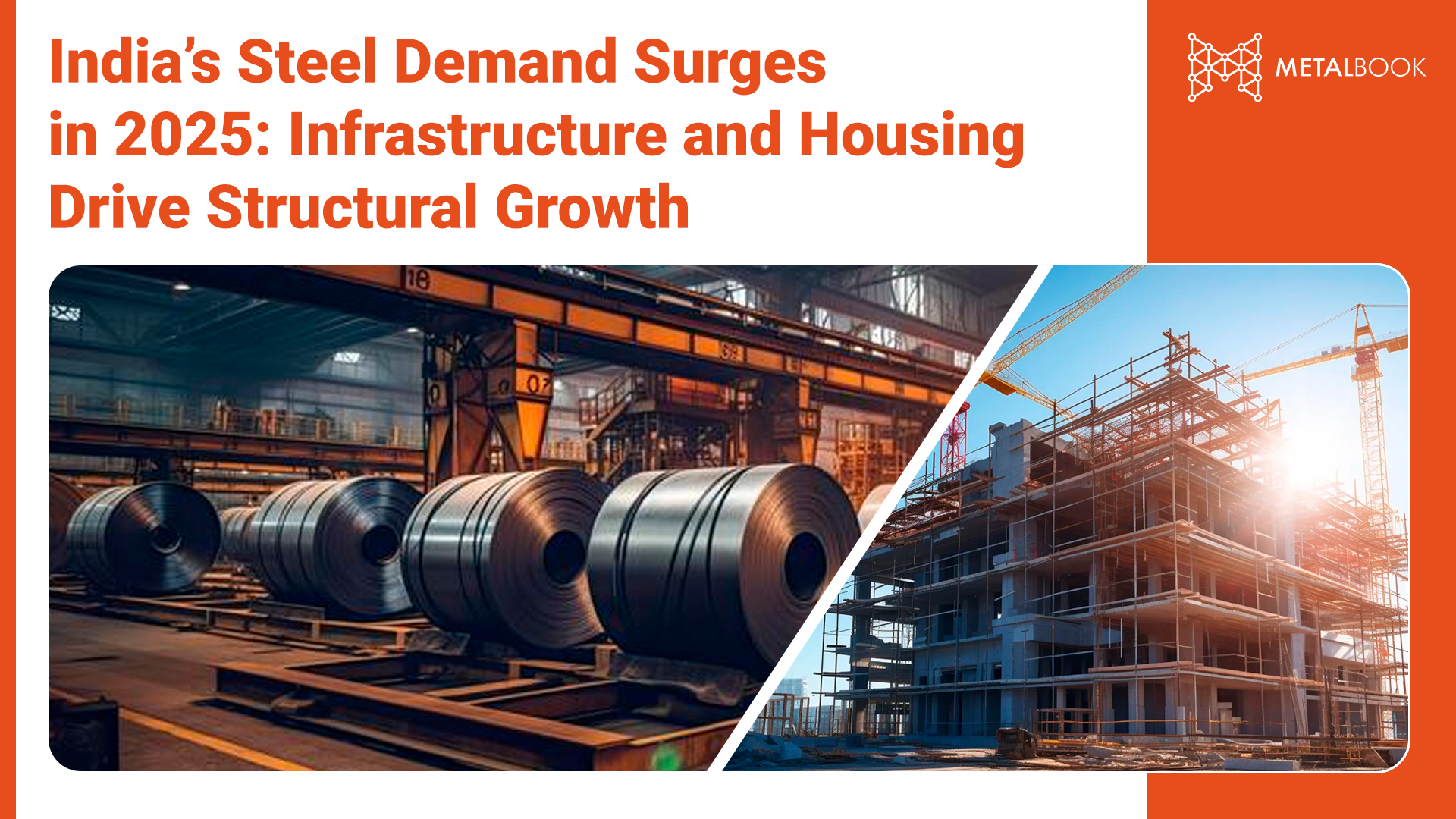
By 2025, the demand for steel in India is anticipated to increase by 8-9%, while global steel markets are expected to experience significantly slower growth of 0.5-1.5%. This difference in demand growth illustrates that the nature of steel consumption in India is changing. It is now largely driven by domestic demand rather than exports. In the past, India was heavily reliant on exports to support high growth cycles and steep price fluctuations. However, this cycle of growth is sustained by long-term priorities in capital investment and development.
Demand Drivers: Infrastructure at the Core
India's consumption of steel for civil engineering and infrastructure is about 65% of the total, thereby being the largest driver of growth in demand. Therefore, significant capital investments in highways, railways, metro systems, industrial corridors, port facilities, power transmission, and urban redevelopment will continue to generate a steady flow of demand for long and flat steel products in India.
In addition to these projects, housing construction is a key support pillar. Construction of affordable and middle-income housing in urban and semi-urban locations creates a strong base demand for steel through greater demand for rebars, structural steel, roofing and fabricated components. Taken together, infrastructure projects and housing projects account for an estimated 25% to 30% of incremental demand for steel in the country.
Manufacturing and Mobility Add Momentum
The manufacturing industry accounts for about 15 to 20 percent of total demand for steel, with the engineering goods, packaging, and industrial machinery markets being the main drivers of this demand. Capital goods and automobile manufacturing, and the growth of light-weight, high-strength, and special grades of steel account for another 10 to 15 percent of steel demand.
Some of the recent trends driving steel demand also include electric mobility, logistics infrastructure, renewable energy installations, and data centres. Together, these segments will drive growth in demand for flat steels with value-added applications, stainless steels, and precision-engineered products.
Per-Capita Consumption as Structural Growth Lever
Steel consumption on a per capita basis in India is currently around 98 kg, which is significantly lower than the global average. By 2030, as urbanization continues to grow and rural areas continue to develop with increasing infrastructure density , India's per capita steel consumption is expected to continue to increase towards 160 kg per capita. Such a widening of the consumption gap illustrates a longer-term structural opportunity within the steel sector. The growth of steel is no longer cyclical but is now entering a multi-year growth phase.
Regional Dynamics: A Multi-Speed Growth Story
Steel demand and production trends vary significantly across regions, reflecting differences in resource availability, industrial concentration, and infrastructure intensity.
Region | Key States | Dominant Demand Sectors | Growth Drivers |
Eastern India | Odisha, Jharkhand, Chhattisgarh | Infrastructure (~65%) | Mining-linked production, large integrated plants |
Western India | Gujarat, Maharashtra | Manufacturing, Autos | Ports, industrial clusters, higher per-capita use |
Southern India | Tamil Nadu, Karnataka | Autos, Metros, Stainless | Urban transit, EV corridors, engineering hubs |
Northern & Emerging Regions | Uttar Pradesh, Andhra Pradesh | Housing, Infrastructure | Expressways, urban expansion, and industrial nodes |
Eastern India continues to dominate steel production due to proximity to raw materials, while western and southern regions lead in downstream consumption and value-added steel usage.
Supply, Capacity and Pricing Trends
Domestic steel production will increase by a further 7-8% in 2025 via brownfield expansions and many units of incremental capacity. This expansion cycle has occurred so far, including more cautious capacity growth, allowing for better absorption of the new supply in fulfillment of demand compared with previous cycles. Strong domestic demand will elevate prices to some extent (estimates of 4-6%); however, the global overcapacity and the potential for increased imports may have moderating effects on upward price pressure. Therefore, steel margins are going to rely more on volume growth, operating leverage and efficiencies than they will on large price increases coming from steel mills.
Outlook
The Indian Steel Industry is now poised for sustained growth and development through the years ahead. Infrastructure Development, Housing Demand, Regional Diversification, and an increasing GDP per Capita are factors leading to a more stable Demand Environment for Steel in India, which signals a long-term development path for the Steel Industry. Therefore, India's Steel Industry is less vulnerable than other nations to external global Steel market fluctuations and will, instead, be more influenced by the long-term development path of the country.

Frequently asked questions