India’s Evolving Aerospace & Defence Supply Chain
Key TakeAways
- India is rapidly expanding domestic capacity for aerospace metals and components, but still relies heavily on imports for high-grade Aluminium, Titanium, and Composites.
- Policy reforms, PPP frameworks, and supplier clusters are accelerating local manufacturing, testing, and certification ecosystems.
- Digital technologies—AI, predictive analytics, and digital twins are strengthening supply chain visibility and operational resilience.
- India is on track to integrate into global aerospace supply chains and achieve significant export potential by 2033.
Introduction
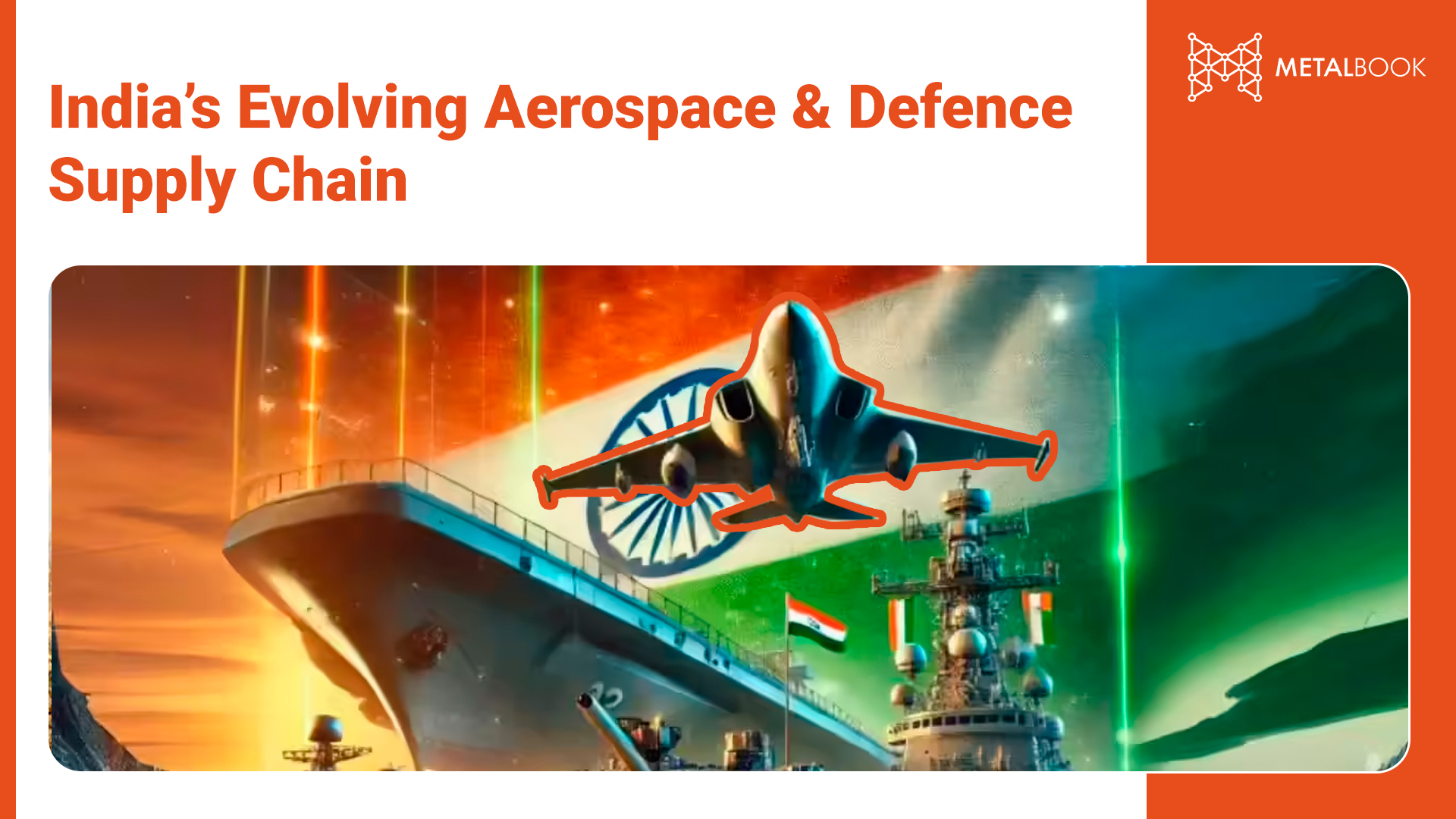
The Indian aerospace and defence industry is undergoing a significant transition in its defence value chain. The industry is rapidly evolving from reliance on high-cost global imports to a framework which supports indigenous capabilities, manufacturing and ultimately the integration into global supply chains.
Critical Raw Materials in Aerospace & Defence
- Aluminium Alloys: These materials are light and corrosion-resistant; they account for 80–90% of the weight in a modern aircraft's structure and also play a significant role in the manufacture of weapons (alloy grade 7075 being most prominent).
- Steel Alloys: High-strength steels (4130, 4340, 8620, 300M) are critical materials in developing numerous components such as landing gear, armoured vehicles, engine components and high-stress applications for defence and military purposes.
- Stainless Steels: Speciality grades (17-4, 440C, S7) provide corrosion resistance , strength, and durability when used for exhaust systems, airframes, and armouring technologies.
- Titanium Alloys: Titanium is a material of choice when a very high strength-to-weight ratio is required, and strong heat resistance is beneficial. Aerospace applications include advanced airframe structures, engines and missile components.
- Nickel & Superalloys: Materials that exhibit heat resistance and chemical resistance are key materials used in diesel and jet engine components, and some high-strength fasteners used in aviation aerospace applications.
Common processing methods for these and other materials include heat treatment , such as annealing , tempering , nitriding, precipitation hardening and advanced surface treatments and coatings that are necessary to ensure the materials qualify for defence and aviation use.

Indian Market Perspective
- Dependence on Imports: High-grade aerospace metals such as Aluminium, Titanium, Niobium, and Advanced Steel are being procured from overseas due to a lack of capacity, bureaucratic delays in certification processes and high costs.
- Policy Support for Indigenisation: Initiatives like “Make in India” and Defence Procurement Policy, and foreign investments are significantly accelerating the indigenisation of advanced materials production, with new suppliers emerging through various incentive programs.
- Domestic Progress: Various Companies now manufacture superalloy castings and titanium parts. Light and medium-sized enterprises (MSMEs) are making headway with tracked warehousing, precision-cutting and logistics for local supply.
- Aerospace Parks & Supplier Co-location: Developing integrated systems found in clusters, through innovation and highlighting local MSME participants, patterned after Bengaluru, Hyderabad and the Delhi National Capital Region, both locally and regionally developing.
The Benefits of Public-Private Partnerships (PPP)
- Fast-Tracking Infrastructure: PPPs capitalise on government support and private sector performance to quickly advance Aerospace Parks, world-class testing labs and research facilities.
- Capital and Technology: Private-sector capital and innovation provide cutting-edge technology alongside more efficient and less burdensome ways of financing and delivering public infrastructure.
- Risk Sharing and Accountability: Risk associated with the project, operations and ongoing maintenance is distributed, resulting in better sustainability outcomes.
- Regulatory Process Modernisation: Transparent accountability and performance-based PPP frameworks facilitate innovation, design for global standardisation, encourage follow-on investment and advance design market competitiveness.
The PPP airport projects in India (e.g., Delhi International Airport) can create models for aerospace sector partnerships to rapidly increase facilities, achieve higher quality standards, and improve logistics.
Policy, Sustainability and Future Outlook
- Sustainability trend: Industry in India is prioritising green alloys, higher recycled content and lower emissions in production for both cost and compliance benefits.
- Digital & AI innovation: Indian and global OEMs are now operationalising digital threads, AI/ML and predictive analytics for supply chain visibility, risk mitigation and maintenance optimisations to strengthen resiliency in challenging times.
- Export potential: Global defence primes and aviation majors continue to see the true potential of sourcing from India and it is expected that India could acquire 10% of the overall global aerospace supply chain by 2033.
- Self-reliance mission: As prototypes (Tejas Mk-1A, AMCA) are now in production, and with electronics, aeroengines, and advanced artillery now sourced locally, India is accelerating its path to independent strategic autonomy and global export leadership.
Conclusion
India’s aerospace and defence supply chain is in a state of transition, from a traditionally import-dependent, fragmented system to currently an agile, innovation-led sector with increasing global gravitas. Supported by a policy reform framework, strong PPP’s, MSME engagement, tech transfer and digital transformation, the sector is set for sustainable growth, resiliency, and competitiveness on the global stage.

Frequently asked questions