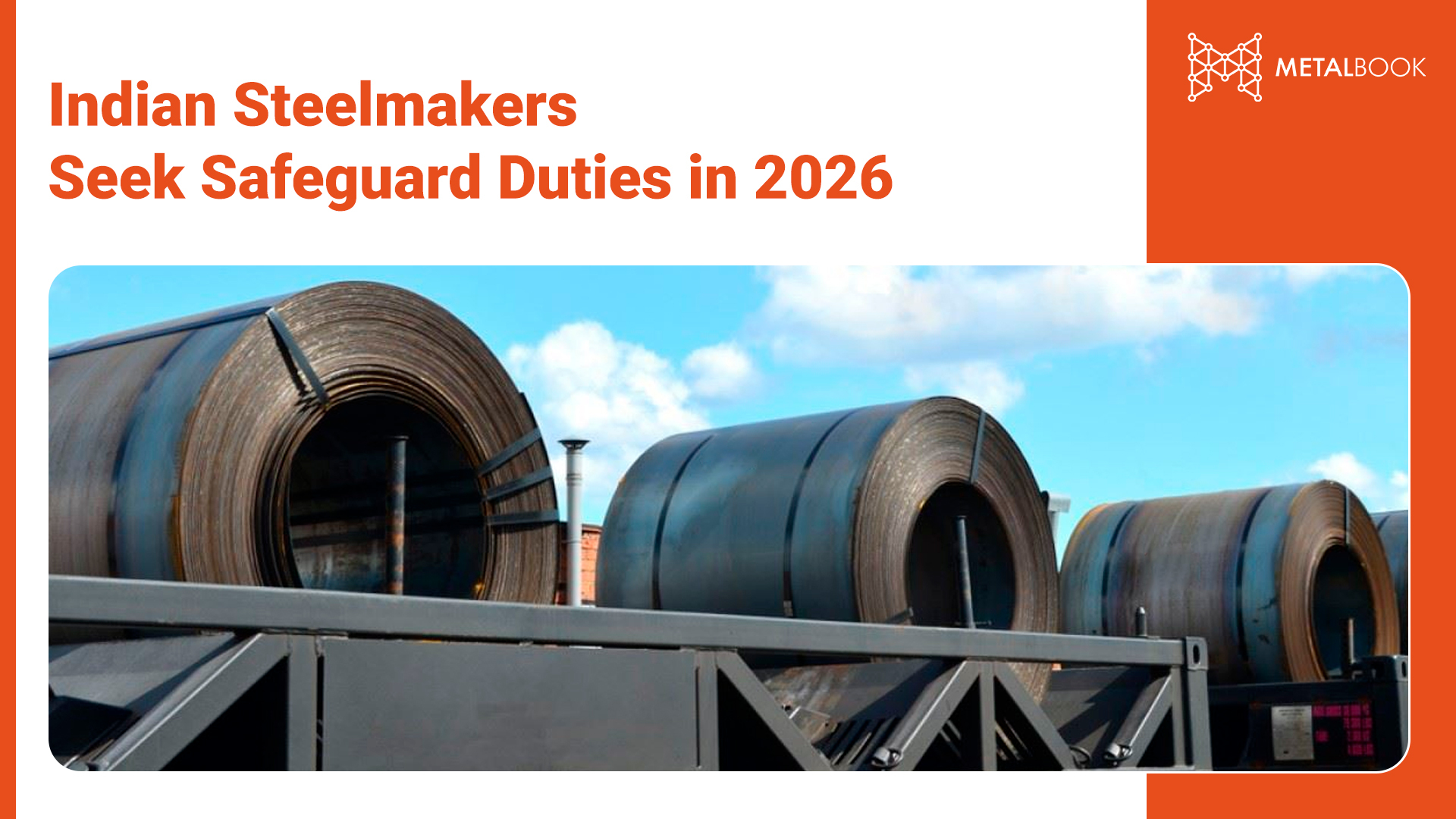
Indian Steelmakers Seek Safeguard Duties in 2026
Key Takeaways
- Indian steelmakers are pressing for extended safeguard duties in 2026 to counter surging low-priced flat steel imports from Asia.
- DGTR’s proposed 11–12% tapered duty aims to stabilise margins amid rapid domestic capacity expansion.
- Rising imports from Vietnam and China continue to undercut domestic pricing, especially in flat products.
- External risks such as the EU’s CBAM strengthen the case for protecting domestic markets while funding decarbonisation.
Indian steelmakers are continuously advocating and pushing their opinions on the implementation of safeguard duties in 2026. The push is to counter the rising influx of cheap steel imports dumped in the country, particularly flat products from China and Vietnam. The persistent global oversupply, coupled with aggressive export pricing from Asian producers, has pressurized the domestic margins when Indian mills are expanding capacity. Industry participants are showing their concern that without trade protection, imported steel is continuing to undercut domestic prices, limiting the benefits of India’s growing steel demand.
Policy Background and Duty Proposals
The focus on safeguarding was basically built after the Directorate General of Trade Remedies (DGTR) recommended it in early 2025. In March 2025, DGTR proposed a 12 percent provisional safeguard duty on select flat steel products, including hot-rolled coils (HRC) and cold-rolled coils (CRC), for a period of 200 days. This recommendation was taken into consideration and implemented in April 2025, with exclusions for high-value imports priced above USD 675 per tonne CIF to minimise disruption to specialised downstream users.
However, in August 2025 three-year tapered safeguard structure was proposed that was 12 percent in the first year, 11.5 percent in the second year, and 11 percent in the third year. The duty will cover flat steel products such as coils, sheets, and plates, while electrical steels and certain value-added grades remain exempt. By November 2025, the recommendations were for the imposition of 11–12 percent duty, particularly to protect domestic producers from import surges routed through free trade agreement (FTA) partners, where tariff arbitrage has amplified inflows from Southeast Asia.
Read more: https://www.metalbook.com/blogs/impact-of-safeguard-duty-on-flat-steel-imports/
Impact on Imports and Industry Margins
As per various sources, there has been anticipation that safeguard duties could significantly alter India’s steel import dynamics. There are theories that imports could decline by around 50 percent in FY26 if duties are extended, improving domestic mills’ pricing and capacity utilisation.
Import data from 2025 highlights the industry’s concerns. Finished steel imports rose sharply on a year-on-year basis, with Vietnam emerging as one of the fastest-growing suppliers of flat steel, followed by China, Japan, and South Korea. Flat products accounted for a disproportionate share of this increase, which directly impacted the domestic industry.
Demand Signals Support the Case
In November 2025, India’s major sector grew 1.8 percent year-on-year, with steel production rising 6.1 percent, highlighting sustained demand from infrastructure, construction, and manufacturing. Cumulative steel output growth of 9.7 percent further underscores the need to ensure that domestic producers, rather than low-priced imports, capture the benefits of this demand momentum. The domestic demand indicators are one of the reasons why reinforcing safeguards will support the industry.
Global Trade Risks: EU CBAM Adds Pressure
Apart from imports, Indian steelmakers are also facing external risks as the European Union’s Carbon Border Adjustment Mechanism (CBAM) is entering its financial phase in 2026, potentially imposing additional carbon-linked costs on Indian steel exporters. Given India’s relatively higher emission intensity compared to European producers, CBAM could diminish export competitiveness, effectively acting as a tariff unless offset by rapid decarbonisation. This external pressure further strengthens the industry’s argument that domestic markets must be protected from unfair imports if Indian mills are to absorb carbon transition costs while continuing to invest.
To read more. https://www.metalbook.com/blogs/cbam-and-the-future-of-indias-steel-exports/
Aligning with India’s 2030 Steel Vision
Safeguard duties are increasingly viewed as a strategic tool rather than short-term protection. As India targets 300 million tonnes of steel capacity by 2030, trade measures are one of the essential elements to sustain investment, manage reliance on imported coking coal, and support the transition toward greener steelmaking technologies. A calibrated, time-bound safeguard framework is likely to provide stability while remaining compliant with global trade norms.
Conclusion
With margin pressures persisting and capacity expansion accelerating, 2026 is shaping up as a critical year for India’s steel industry in terms of policy making. Steelmakers are somewhat optimistic that extending safeguard duties in a structured manner would help in restoring market balance, encourage domestic production, and strengthen India’s long-term industrial competitiveness without distorting downstream demand.

Frequently asked questions