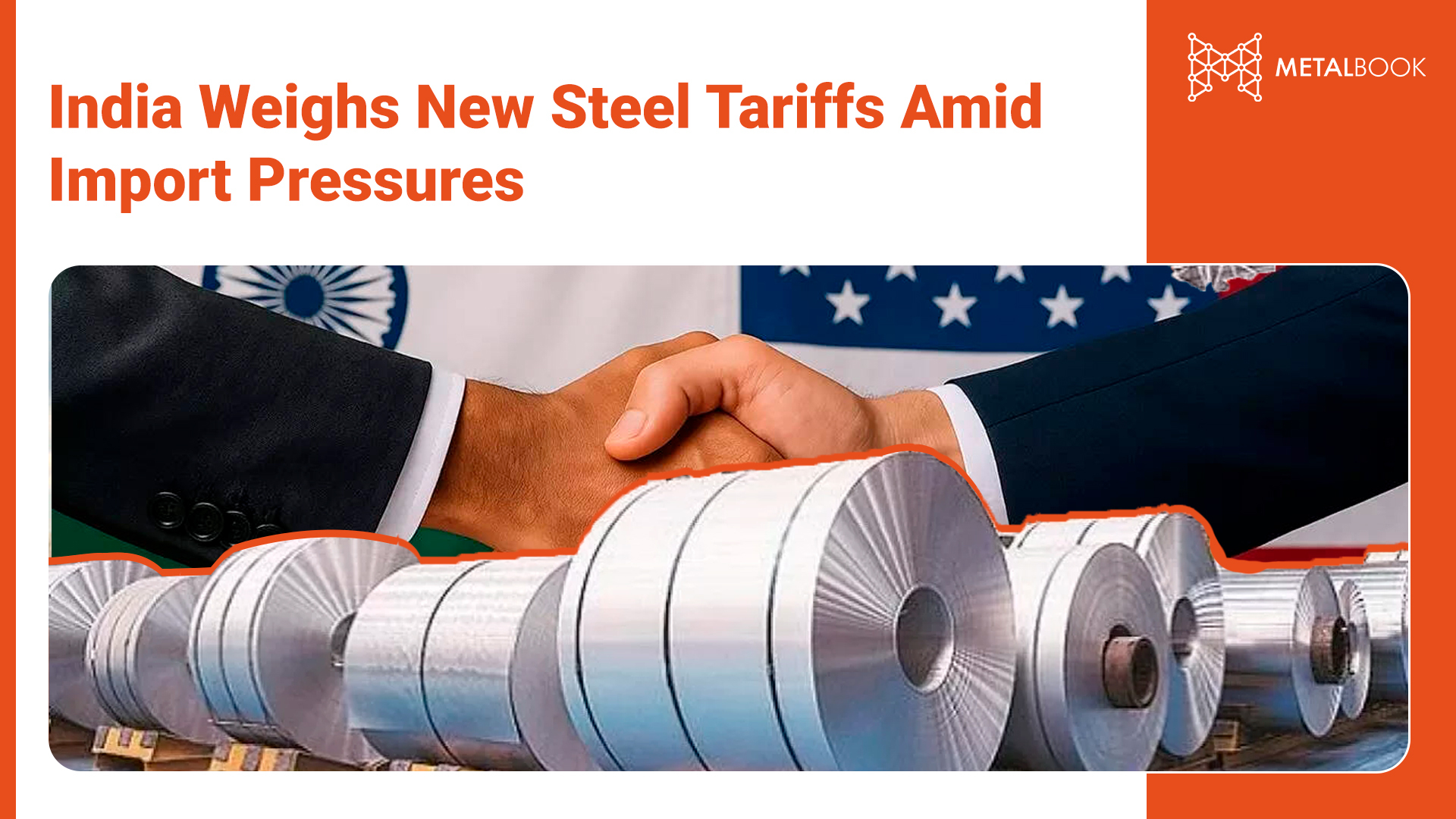
India Weighs New Steel Tariffs Amid Import Pressures
Key Takeaways
- India's 12 percent Safeguard Duty targeted surging cheap Chinese Steel Imports, but was only temporary.
- While steel import volumes fell 34% year-over-year, steel prices in India remain under pressure, even after the Safeguard Duty ended.
- The Government may implement an 11-12% Safeguard Duty again, once the DGTR determines if there is a sustained case of injury.
- Indian Steel Producers will have more pricing power; however, Indian Steel Mills will have to pass along the increased price of steel to their downstream customers.
Overview
India’s steel sector in 2025 has been shaped by intense import pressure, volatile global prices, and an oversupply-driven export push from China and ASEAN suppliers. To protect domestic producers, the government deployed safeguard duties and anti-dumping measures, most notably a 12% provisional safeguard duty imposed in April 2025 for 200 days. With this duty now expired and import volumes rising again, policymakers are evaluating whether to reinstate or adjust tariffs in the 11–12% range while DGTR continues active investigations into dumped stainless and flat steel products.
Why the Tariff Was Imposed
In April 2025, based on a report issued by the Directorate General of Trade Remedies (DGTR), the central Government created a tariff on low-cost steel imported into India, especially hot-rolled, cold-rolled, coated and stainless-steel flat products. The DGTR report indicated that the enormous increase in the volume of imports of low-cost steel from China damaged Indian steel manufacturing companies. The majority of the damage resulted from Chinese steel being sold onto the market at a substantial undercut to what prices Indian companies could offer. Smaller to medium-sized steel manufacturing companies had the highest level of risk, with many having severely compressed profit margins and less order books. The WTO rules permitted the Government of India to impose a temporary safeguard of no more than 200 days to allow for protection of the manufacturing segment while the full investigation of the damages occurred. To do this, a tariff of 12% was created as a temporary breathing space to help stop the significant drop in prices and allow Indian Steel manufacturing plants the opportunity to return to production levels closer to what would be viable for their companies.
Policy Measures Implemented in 2025
India’s trade policy in 2025 used a multi-layer approach:
- Safeguard Duty (April–November 2025): A flat 12% duty on select alloy and non-alloy flat steel products. It automatically lapsed after 200 days, in line with WTO requirements.
- Anti-Dumping Investigations: DGTR initiated investigations into cold-rolled stainless steel (300 and 400 series) and other flat products from China, Indonesia, and Vietnam. These probes were triggered by evidence of dumped imports sold below the normal value.
- Five-Year Duty on Vietnamese Hot-Rolled Products: In November 2025, the Finance Ministry imposed a five-year anti-dumping duty on hot-rolled flat steel from Vietnam after DGTR confirmed dumping and material injury.
- Consideration of a Renewed Safeguard (11–12%): With the April duty expired, the government is now reviewing whether to extend or revise the tariff based on import levels, domestic pricing, and DGTR recommendations. Early indications suggest that an 11–12% duty may be reinstated for certain flat products if injury risks persist.
What the Data Shows
The impact of these measures is visible in import and production data. Between April and October 2025, India imported 3.8 million tonnes of finished steel, a sharp 34.1% decline year-on-year—a sign that the provisional safeguard influenced trade flows.
Domestic production was very robust (around 91.6 million metric tons of finished steel and 95.7 metric tons of crude) and remained largely unaffected by the decrease in imported finished steel. Large quantities (mostly from China) had already landed below the established domestic price bands, raising concerns that if they were allowed to continue without respite, the price advantage of such low-priced imports would again disrupt the domestic steel market.
Impact on Domestic Mills and Buyers
The safeguard announced in April provided a significant boost to both primary and secondary integrated steel makers. The combination of steel price stability and reduced inventory on hand, combined with the marginal improvement in capacity utilization for domestic flat product mills, helps to mitigate the impact of foreign suppliers aggressively undercutting prices on domestic steel producers and continues to pose a direct threat to the profitability of a number of domestic producers. On the other hand, downstream consumers of steel, particularly during the first half of 2020, will experience an increase in their landed cost (including USD 10.00) for speciality steel products. There are still some areas of speciality flat and stainless steel in India where imports are made, which has resulted in an increased tariff on imported products being passed on to those end-users. This has allowed for an overall decrease in the price fluctuation for many end-users, allowing for more reliable procurement processes.
Outlook
India’s active trade remedy status due to global excess supply and China’s continued export promotion is likely to continue. Renewing the safeguard at 11-12% would be a strong possibility if DGTR injury assessment reports confirm ongoing risk, with a potential expansion of anti-dumping cases, primarily in stainless and coated steel, also being a possibility.
Continued tariff intervention in the Indian market is expected to accomplish multiple objectives:
- It would reduce import volume by an additional 30-40% on key flat products.
- It would support a domestic pricing floor.
- It would increase utilization rates for smaller mills
- It would, however, increase input costs for downstream industries that rely on such steel.
In 2026, India must balance its duty to protect domestic steel producers without imposing too great of a burden on manufacturing sector growth. The balance above will be dependent on how global prices, the behaviour of China in exporting steel, as well as recommendations provided by DGTR.

Frequently asked questions