India Lifts Import Restrictions on Low-Ash Metallurgical Coke
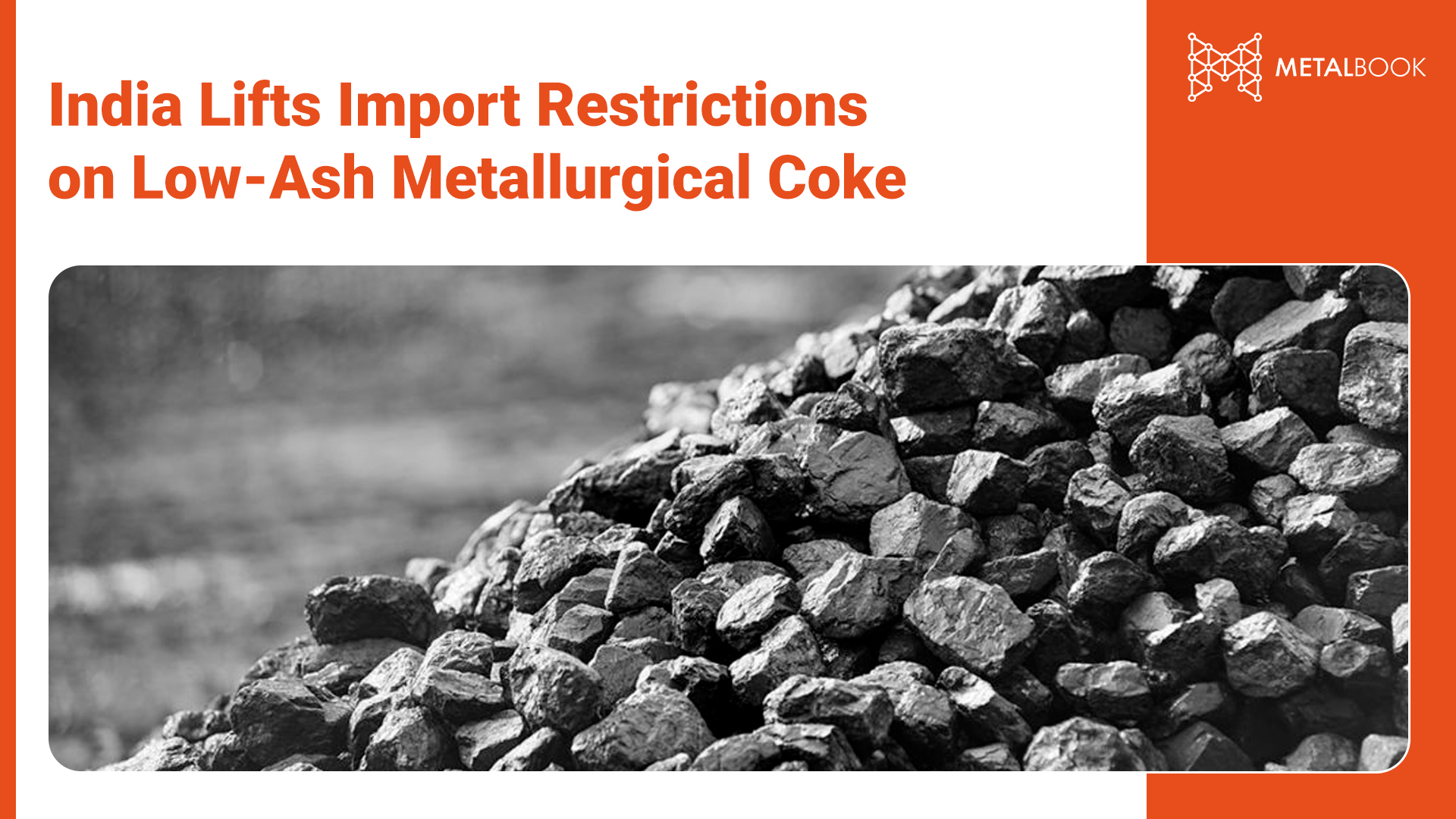
The Indian government has taken a significant step forward with the removal of import restrictions on low-ash metallurgical coke, a key raw material for steel production. Now, the imports of the key steelmaking input are freely permissible with immediate effect, according to a notification issued by the Directorate General of Foreign Trade (DGFT) on 3 January 2026.
Timeline: From Restrictions to Free Imports
Here’s a visual summary of how India’s policy on low-ash metallurgical coke has evolved:
Year | Policy/Event |
Jan 2025 | Import restrictions were introduced with country-wise quotas and prior authorization |
Jan – Dec 2025 | Extension of policy |
Jan 2026 | Removal of Restrictions |
The Past Scenario: Why Restrictions Were Implemented
In January 2025, India placed quantitative restrictions on imports of low-ash metallurgical coke through the application of prior authorization and quantitative restrictions on a country-specific basis. The intent of implementing these restrictions was to protect domestic producers of low-ash metallurgical coke from the low prices of imported cokes. While these policies supported domestic metallurgical coke producers, they have also presented challenges to steel producers as they have reduced access to a critical input of raw material, resulting in steel manufacturers such as JSW Steel and AM/NS India suffering from operational disruptions and increased production costs as a result of the limited access to LAMC. Both companies have requested an exemption from the policy.
Present Scenario: Removal of Restrictions
In January 2026, the government announced the removal of Policy Condition No. 8 from the Import Policy under ITC (HS) Chapter 27. This announcement depicts the elimination of both import quotas and, along with it, the requirement for prior authorization, effectively allowing unrestricted imports of low-ash metallurgical coke.
Now, it will allow steel manufacturers to import Low-Ash Metallurgical Coke without limit and will increase the supply chain flexibility to manufacturers. Though, there aren’t limits on the number of Low-Ash Metallurgical Coke that can be imported, the anti-dumping duties on the Low-Ash Metallurgical Coke imports will remain in effect; these duties are applied to all imports of Low-Ash Metallurgical Coke regardless of the country of origin and range from $61 to $131 per metric tonne based upon the countries from which they were imported to protect domestic producers against the possible effects of price distortions resulting from overseas producers.
Conclusion
India’s decision to lift import restrictions on low-ash metallurgical coke represents a shift that allows producers to remain competitive. It has been anticipated that it will address the operational challenges faced by steel producers and also provide protection to the domestic manufacturers through antidumping duties. Thus, it will promote stable supplies and predictable pricing while allowing for an efficient production process to support the ongoing growth and increase competitiveness.