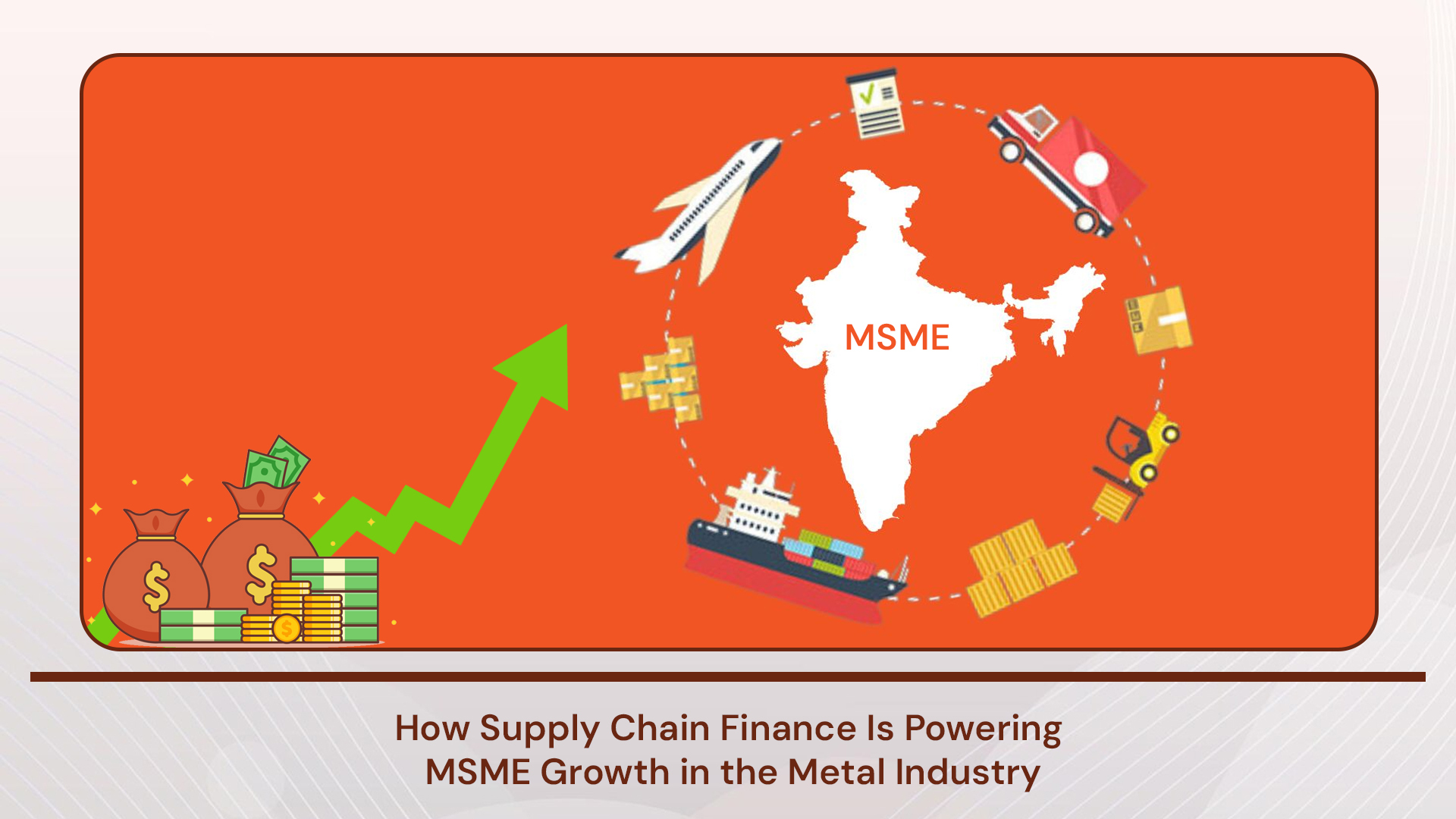
How Supply Chain Finance Is Powering MSME Growth in the Metal Industry
This is where supply chain finance steps in, and it's changing the game for small manufacturers across India's metal industry.
What Exactly Is Supply Chain Finance for MSMEs?
Supply chain finance, or SCF, is simply a smart way to unlock the money that's stuck in your unpaid invoices. Think of it as a bridge between when you deliver goods and when you actually get paid.
Here's how it works in plain terms: You deliver steel pipes or metal components to a buyer. Instead of waiting months for payment, a financial institution pays you right away based on that invoice. The buyer then settles with the financial institution on their regular payment schedule.
No collateral needed. No lengthy paperwork. Just faster access to your own money.
The metal industry sees this as a lifeline because production never stops. Raw materials need purchasing, electricity bills need paying, and workers need their salariesnone of these wait for your buyer's 90-day payment cycle.
Why Metal MSMEs Struggle With Cash Flow
The metal industry has always been capital-intensive. Whether you're running a small casting unit, manufacturing metal tubes, or operating a steel service center, you face unique pressures.
Prices can rise between order confirmation and raw material purchase, squeezing your already tight margins. You need steel, aluminum, or copper today, but you won't see payment until next quarter.
Manufacturing units in sectors like construction, mining, and engineering regularly face delayed payments. According to industry data, over 44% of MSME units in manufacturing face delayed payments. For small metal businesses, this creates a vicious cycle you can't take on new orders because your capital is tied up in old ones.
Traditional bank loans don't solve this problem. They require collateral most small businesses don't have, involve months of processing, and add long-term debt to your balance sheet.
How Working Capital Finance Through SCF Solves Real Problems
Supply chain financing addresses the specific pain points metal MSMEs face every day.
Immediate Liquidity Without Debt
Unlike business loans, SCF doesn't add debt to your books. You're essentially getting early payment on money you've already earned. This matters when you're trying to maintain a healthy credit profile or apply for equipment financing later.
One metal parts manufacturer shared how supply chain financing gave them cash-flow flexibility, allowing them to purchase raw materials without delay and accept larger orders confidently.
No Collateral Requirements
Most small metal fabricators operate with leased equipment or don't own significant fixed assets. Traditional lenders want property or machinery as securitythings many MSMEs simply don't have.
With SCF, the invoice itself acts as the basis for funding. Your relationship with a creditworthy buyer becomes your collateral. This levels the playing field dramatically.
Faster Processing Times
When a new order comes in, you can't wait three months for loan approval. Supply chain finance platforms process requests in days, sometimes hours. This speed matches the pace of actual business.
Invoice Discounting and Reverse Factoring Explained Simply
There are two main types of supply chain finance that metal MSMEs use:
Invoice Discounting means you sell your unpaid invoices to a financier at a small discount. You get immediate cash, they collect from your buyer later. You maintain control over customer relationships.
Reverse Factoring involves your buyer's participation. Because they approve the invoice first, you get better rates. Large metal buyers often set up reverse factoring programs specifically to support their smaller suppliers.
Both methods help you convert receivables into working capital fast, but reverse factoring typically offers lower costs because it's backed by the buyer's stronger credit rating.
Real Impact on Metal Industry Operations
The benefits of supply chain financing extend beyond just faster payments.
Taking Bigger Orders Confidently
When you know you can access funds quickly, you can bid on larger projects. A small tube manufacturer might hesitate on a big infrastructure order because it ties up all their working capital. With SCF, they can accept that order knowing they won't run out of cash midway.
Better Supplier Relationships
With working capital readily available, you can pay your raw material suppliers promptly. This often means better pricing, priority treatment during shortages, and stronger long-term partnerships.
Planned Equipment Upgrades
Steady cash flow lets you plan upgrades without crisis borrowing. Instead of running old machinery until it breaks, you can schedule preventive maintenance and gradual improvements.
Technology Makes SCF Accessible to Small Businesses
Earlier, supply chain finance was only for large corporations with banking relationships. Now, fintech platforms have democratized access.
Digital platforms allow MSMEs to upload invoices, get instant approval indicators, and receive funds within days. The entire process happens online no branch visits, no piles of paperwork.
FinTechs have revolutionised the SCF segment by digitising the interaction between entities, making it accessible even to micro enterprises in tier-2 and tier-3 cities where metal clusters often operate.
Government initiatives like TReDS (Trade Receivables Discounting System) have further simplified invoice financing, especially for MSME suppliers dealing with larger corporate or government buyers.
Choosing the Right Supply Chain Finance Solution
Not all SCF options work the same way. Here's what metal MSMEs should consider:
Cost Structure: Compare the discount rates or fees. While SCF is generally cheaper than emergency loans, rates vary based on your buyer's creditworthiness and your transaction history.
Processing Speed: Some platforms offer same-day processing, others take a week. Match this to your operational needs.
Flexibility: Can you finance select invoices or does the entire receivables book need to be included? Selective invoice financing gives you more control.
Buyer Relationships: Some buyers prefer certain platforms or have existing SCF programs. Using their preferred channel often means better terms.
Common Myths About Supply Chain Finance
"It's just expensive borrowing": Actually, SCF rates are typically lower than working capital loans because the risk is lower—there's a confirmed invoice from a creditworthy buyer.
"Only large companies qualify": Many fintech SCF providers specifically target MSMEs. Some focus exclusively on businesses with annual revenues under ₹50 crore.
"It damages buyer relationships": Most buyers appreciate suppliers who can fulfill orders reliably. SCF actually strengthens supply chains by ensuring supplier stability.
Getting Started With Supply Chain Finance
If you're running a metal MSME and cash flow is constantly tight, here's how to begin:
Review your receivables: Look at how much money is stuck in unpaid invoices. This is your potential SCF funding.
Research platforms: Compare 3-4 fintech SCF providers or check if your buyers offer reverse factoring programs.
Start small: Try financing one or two invoices first to understand the process and costs.
Track the impact: Monitor how faster payments affect your operationscan you take more orders? Reduce expensive short-term borrowing?
Scale gradually: As you get comfortable, increase the proportion of invoices you finance.
The Future of MSME Growth in Metal Manufacturing
Supply chain finance isn't solving every problem metal MSMEs face, but it's removing one of the biggest obstacles trapped working capital.
As more small manufacturers adopt SCF, the entire metal supply chain becomes more resilient. Suppliers can grow, invest in better equipment, and compete more effectively.
The Indian metal industry needs strong MSMEs. Infrastructure projects, construction booms, and manufacturing growth all depend on countless small units delivering quality metal products on time. Supply chain finance gives these businesses the financial breathing room to fulfill that role.
For metal industry MSMEs, the question isn't whether to explore supply chain finance,it's how quickly you can start using it to unlock your business's potential.

Frequently asked questions