Green Steel in India: From Scrap-Based Circularity to Hydrogen-Led Decarbonisation
India's steel production is one of the most carbon-intensive on the planet, with mean emissions at 2.65 tonnes of CO₂ per tonne of finished steel, representing 20-25% higher than normative global averages. The leading cause is the share of coal-based blast furnace-basic oxygen furnace (BF-BOF) technology, which accounts for 61% of the capacity. There is also a large amount of coal-based direct reduced iron (DRI), of which 60% is produced using coal. Other factors leading to large emissions include the use of mostly low-grade iron ore inputs, the overall age of steel plants, and the burning of high-ash coal. Some BF-BOF plants emit as high as 3.83 tonnes CO₂ per tonne of crude steel.
In light of climate imperatives and the undirected commitment to reach net-zero emissions by 2070, India announced the National Mission on Green Steel. The target of this mission is to reduce emissions intensity from 2.65 to 2.20 tonnes CO₂ per tonne of finished steel by 2029–30. Key strategies include the adoption of hydrogen-based DRI, increasing usage of electric arc furnace (EAF) capacity, utilising carbon capture and storage (CCS), and facilitating recycling opportunities for steel. Supporting policies include the Green Steel Public Procurement Policy, which will require the use of minimum amounts of green steel on any government project from FY28, and the Green Steel Taxonomy, which aims to develop markets to create a demand for green steel and establish clarity on standards of low-carbon steel for industries. Programs such as SCALES, which provide accessible financial initiatives to encourage developers to invest in their green steel technologies, are creating a canvas of opportunities.
The momentum behind green steel in India is being driven by a convergence of external pressures and domestic policy signals. Globally, export markets are tightening carbon norms, for example, the EU’s Carbon Border Adjustment Mechanism, which effectively links market access to emissions intensity. Domestically, public procurement guidelines, ESG-linked financing, and increasing expectations from automotive and infrastructure buyers are reinforcing the need for measurable emission reductions. While green steel production represents a small fraction of the current market, demand for green steel is expected to grow to 4-5 million metric tons by 2030, particularly in export applications, electric mobility, and large infrastructure projects.
Therefore, India's approach to green steel as a priority sector has been characterised by a phased strategy to develop commercial-scale green steel. The National Green Hydrogen Mission (NGHM) identifies the mitigation of global warming due to greenhouse gases (GHG) as one of its six priority sectors, of which steel is one. The NGHM is supporting three pilot projects to develop hydrogen injection into blast furnaces, hydrogen-based DRI, and hybrid steelmaking to verify technical feasibility, quantify potential GHG emissions reductions, and define the economic thresholds for commercialised green steel products.
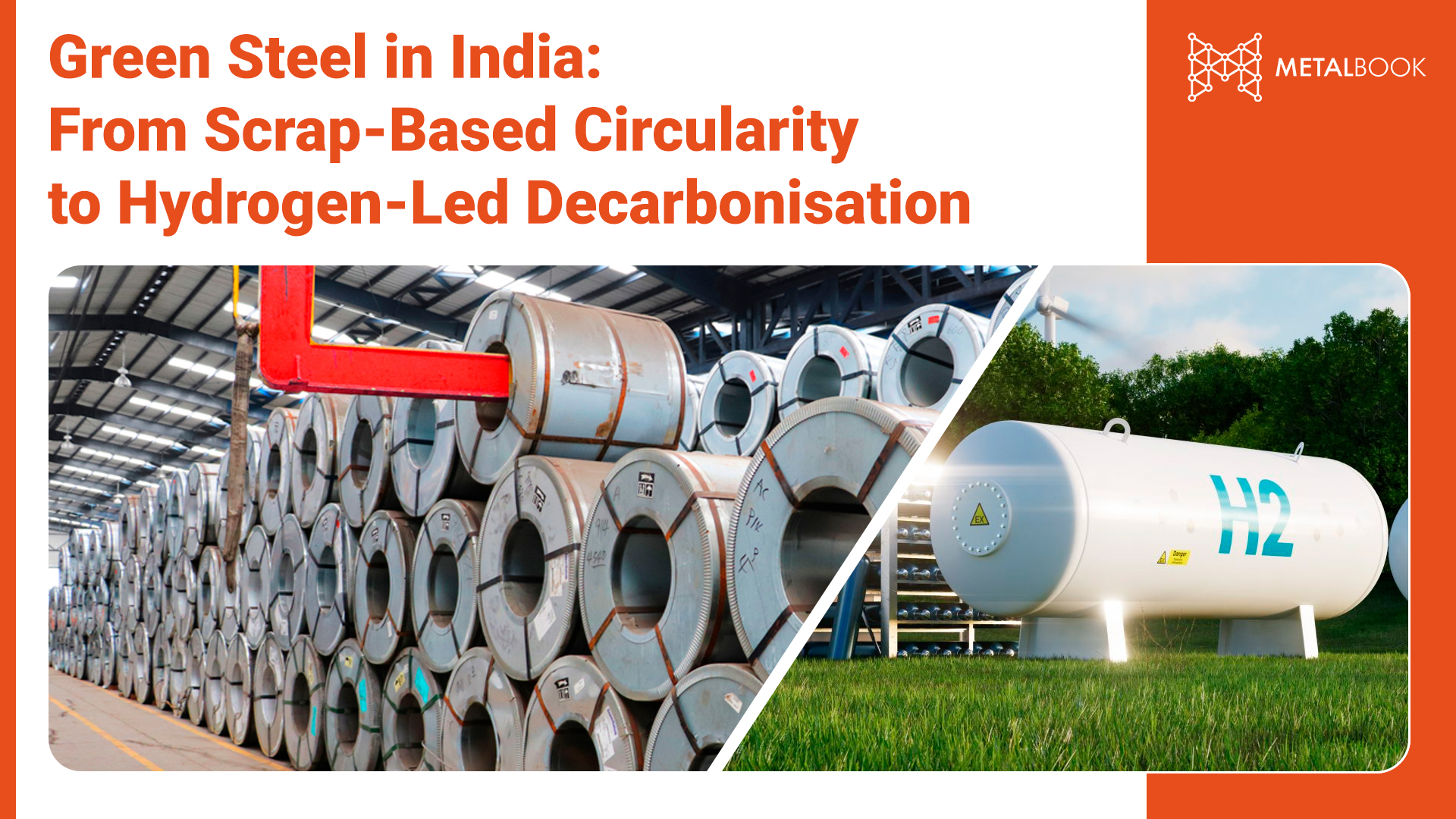
However, there have been indications that hydrogen injection can partially substitute coke in blast furnaces, reducing emissions without dismantling existing assets. So, more transformative routes are identified, such as hydrogen-based DRI paired with electric arc furnaces, which offer substantially deeper decarbonisation, but the issue lies in that they require large volumes of low-cost green hydrogen and renewable energy.
Currently, hydrogen economies remain the primary constraint, with higher costs acting as a barrier for the steelmakers to scale production competitively. As a result, hydrogen-based steelmaking in India is expected to progress gradually. Thus, Indian Steel Mills Prefer Alternative Routes for Green Steel Over Hydrogen.
In contradiction of hydrogen’s longer gestation, scrap-based steelmaking and circular economy models represent the most immediately viable pathway for emission reduction, and major companies are opting for it so that they can compete on a global level and be on track to achieve net-zero. Electric Arc Furnaces using scrap reduce carbon emissions by 60–70 percent compared to traditional blast furnace routes, especially when powered by renewable energy.
However, India’s relatively low per-capita steel consumption means that domestic scrap availability remains limited, forcing continued reliance on imports in the near term. To address this structural gap, policy interventions such as the vehicle scrappage programme, National Scrap Policy are long-term enablers of circular steelmaking.
In India, the path to green steel development will require a clearly sequenced and coordinated approach. The short term will be characterised by improving efficiency, using greater amounts of steel scrap, and starting to partially replace fossil fuels with alternative fuel sources in the making of steel. The medium term should see some hydrogen-based processes deployed as the costs continue to drop and the infrastructure that supports the production of hydrogen-based primary metals continues to develop. The biggest transformation to near-zero-emission steel production may be possible after 2035 based on the ongoing decarbonisation of the entire energy system.
India's green steel development is not limited by technology, understanding, or desire to produce green steel, but rather by the economic considerations and the lack of an integrated system that will support green steel manufacturing. As the steel industry experiences rapid growth in production volumes (due to expanding capacity) while simultaneously reducing emissions, the most pressing issue will be to create a pathway where the decarbonisation of steel manufacturing will increase, rather than decrease, the global competitiveness of steel manufacturers. Thus, steel producers will have an opportunity to create and maintain a long-term strategic advantage by investing early in learning, developing certification, and developing low-carbon production capabilities as carbon becomes an increasingly important factor in the global steel trade.