Current Trends in India’s Vehicle Scrappage System
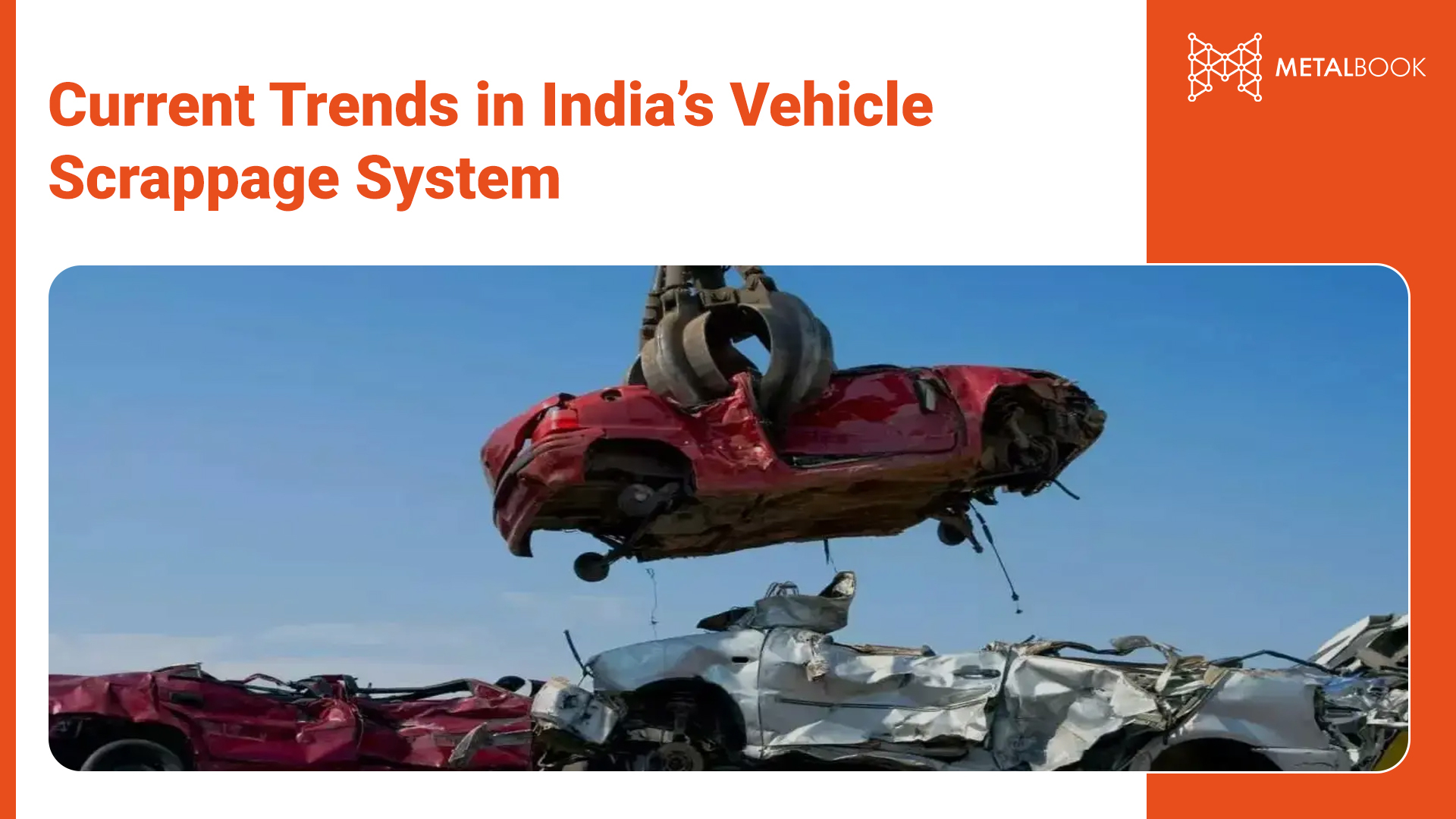
India’s end-of-life vehicles (ELV) recycling ecosystem is undergoing a structural transition. Following the implementation of the national vehicle scrappage policy in April 2023, a rapid expansion of registered vehicle scrapping infrastructure was observed. Organised recyclers and OEM-linked players have created capacity, and it is anticipated that a gradual and sustained rise in ELV availability will be seen in the coming times.
Currently, the recycling ecosystem remains capacity-heavy but supply-constrained. While Registered Vehicle Scrapping Facilities (RVSFs) have increased in number, actual ELV inflows continue to lag potential, keeping utilisation levels modest and underscoring the need for stronger sourcing and incentive mechanisms.
RVSF Infrastructure in India
As per the data, there were 84 RVSFs operational by January 2025, an increase from the initial rollout phase. Since then, approvals have continued, but the pace of commissioning is measured by lower industry expectations.
By December 2025, total approved RVSFs stood ~150, of which a smaller share was fully operational. The assumption of 180–190 facilities overstated the actual on-ground status, as no clear distinction has been made regarding which are approved, under-construction, and operational units. However, several additional facilities are under development, projections of 50–70 new RVSFs remain indicative rather than confirmed and depend on state-level execution and ELV supply visibility.
Overall, infrastructure expansion remains real but incremental, reflecting cautious capital deployment amid an uncertain utilisation outlook.
Capacity Creation Versus Utilisation
Despite rising facility count, utilisation at RVSFs remains constrained. Industry estimates continue to place average utilisation at around 40–50%, reflecting ELV inflows that have not yet matched installed capacity.
This imbalance highlights that the ecosystem is still in a positioning and readiness phase, with organised players building compliance-led capacity ahead of a more meaningful rise in vehicle deregistration and scrappage volumes.
Updated Scrappage Volumes till December 2025
As per data, Cumulative scrappage volumes are higher than previously stated, but the overall impact is still small when compared to how many old vehicles actually exist in India.
By December 2025, about 3.94 lakh vehicles were scrapped through authorised scrapping centres. Out of these:
- Around 1.65 lakh were government vehicles
- About 2.39 lakh were private vehicles
However, it has been estimated that India has around 12 million vehicles that are old or unfit as per the scrappage norms. However, when there is a comparison, it can be seen that only about 3 out of every 100 eligible vehicles have actually been scrapped so far. So even though scrappage numbers are improving, they are still very low compared to the potential. The scrappage penetration is “under 5%”, but it shows the potential of it growing, but has not yet reached a meaningful scale.
State-Wise Distribution
India’s registered vehicle scrapping infrastructure remains highly concentrated, with Uttar Pradesh leading. As of mid-2025, Uttar Pradesh had around 32 operational RVSFs, accounting for nearly 45% of cumulative national scrappage volumes, reflecting early policy adoption, high vehicle density , and relatively stronger enforcement.
Haryana follows with approximately 17–22 RVSFs, broadly in line with earlier estimates, supported by strong logistics connectivity and proximity to the Delhi-NCR automotive cluster. Gujarat, Maharashtra, Madhya Pradesh, and Chhattisgarh together contribute a meaningful but smaller share, forming the next tier of RVSF presence.
Overall, the top states account for over 70% of India’s operational RVSFs, confirming a skewed regional distribution. Southern and eastern India remains under-penetrated, highlighting significant long-term expansion potential as policy enforcement improves and ELV supply visibility increases.
Composition of Vehicles Being Scrapped
Scrappage activities are currently quite distorted, but with policies and strong participation, respective results will be achieved in the near future. Government vehicles have played a catalytic role in the early phase of policy execution, accounting for a disproportionately high share of scrapped units relative to their fleet size. Private vehicle participation, while higher in absolute terms by end-2025, remains largely voluntary and incentive-sensitive. Thus, this shows why scrappage volumes have risen gradually rather than sharply.
Structural Reasons for Limited ELV Inflows
There are several policy and behavioural factors that continue to limit ELV supply:
One of the major reasons is that India’s scrappage framework works on fitness-based rather than age-based, allowing vehicles to remain operational as long as they pass periodic fitness and emission tests. This significantly delays scrappage for private vehicles, particularly outside metros.
In addition, direct financial incentives for voluntary scrappage remain limited, and state-level benefits vary widely. Many vehicle owners continue to extract residual value through extended use or informal resale, reducing near-term ELV availability for organised recyclers.
Scrap Recovery and Material Profile of ELVs
The assumptions of how the material can be recovered from old vehicles are mostly accurate.
Depending on the type of vehicle, ferrous metals account for 65–80% of the scrap that can be recovered.
- Two-wheelers typically recover 65–70% of ferrous scrap.
- Passenger vehicles show similar ratios, but as they are heavier, the total amount of scrap recovered is higher.
- Commercial and heavy vehicles achieve higher recovery rates of 70–80% due to greater steel intensity.
Non-ferrous metals, primarily aluminium, copper, and brass, represent around 8–12% by weight, but play a critical role in value realisation for organised recyclers.
ELVs and India’s Scrap Generation Potential
As per various data sources, India generates approximately 35–36 million tonnes of scrap annually across industrial, home, ship-recycling, imported, and ELV sources. ELVs contribute an estimated ~5.3 million tonnes of scrap by FY25, broadly consistent with earlier estimates of 5–6 million tonnes.
GST Framework and Its Implications
The fact that the GST structure has a heavy influence on the economics of organised scrapping. The 18% GST on ferrous scrap means that organised RVSFs almost entirely operate within GST's tax measures. Conversely, informal dismantling channels, as they don't operate under GST, allow vehicle owners to receive large cash payouts on the spot with no delay.
It is important to note that while input tax credits (ITCs) can be accessed, the realisation and utilisation processes both take time and, therefore, create significant working capital constraints for new facilities, which may prevent many additional RVSFs from starting up quickly and smoothly.
Industry participants believe GST rationalisation will support margins, but GST's ability to change volumes is minimal. GST efficiency could create an environment for the formalisation of additional RVSF operators, but it may not significantly increase the size of the ELVs coming through RVSFs.
Role of OEMs and Organised Recyclers
OEM-backed and organised recyclers continue to build capacity ahead of demand through state-level MoUs, multi-location networks, and integration with fleet and insurance channels.
Medium-Term Catalysts: Emission Norms and Enforcement
As stricter requirements and enforcement of BS VI norms come into effect and the anticipated transition toward BS VII will take place beginning in FY27, compliance costs and maintenance costs on older vehicles - particularly in metropolitan areas like Delhi-NCR - will likely increase.
In the long term, it is expected that increased operating expenses, restrictions on use, and the remaining value of the vehicle are likely to speed up scrapping decisions, particularly among commercial fleets and heavy-use private automobiles.
Outlook
As of January 2026, India’s ELV recycling ecosystem is best characterised as infrastructure-led with gradual demand formation. While capacity expansion has progressed steadily, ELV inflows remain constrained by policy design, incentive structures, and longer vehicle life cycles.
Over the medium term, tighter emission norms, improved deregistration enforcement, stronger government fleet participation, and OEM- and fleet-led scrappage programmes are expected to lift utilisation levels. As this transition unfolds, organised recyclers are likely to consolidate their advantage, supporting formalisation and strengthening India’s domestic scrap supply base.

Frequently asked questions
Related Content
Union Budget 2026: What It Means for Metal Distributors and Fabricators

Madhya Pradesh PM-KUSUM Solar Auction: Market Overview and Metalbook’s 95 MW Betul Project

Optimising Working Capital: Strategies for Metal Distributors and Fabricators