AIIFA Pushes GST Reform and Green Steel for Sector Revival
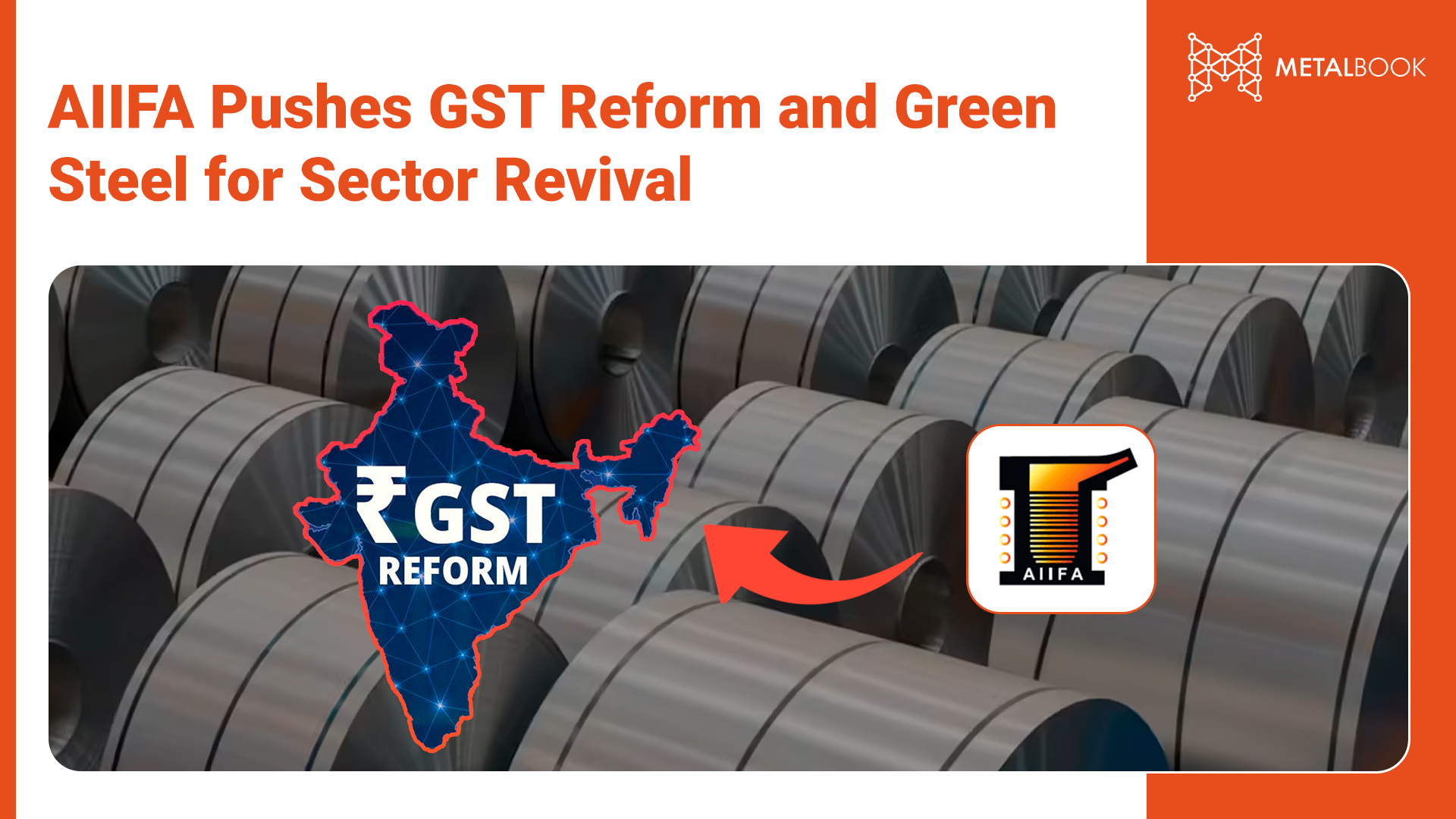
The secondary steel industry in India is arguably facing one of the biggest transitions in decades, driven by regulatory changes, a focus on sustainability, and a more demanding expectation for process transparency. To that end, the All-India Induction Furnaces Association (AIIFA) convened industry experts and policymakers for a directed engagement aimed at tackling longstanding issues and accelerating the industry's move towards responsible and efficient steelmaking.
Why is this Intervention Necessary?
For many years, the induction furnace and secondary steel sector has been challenged by the same set of issues which has hampered its growth and global competitiveness.
- Complicated GST compliance for scrap-based manufacturing: Since the introduction of the GST regime in 2017, issues surrounding scrap trading and documentation have been ever-present. Matters such as ITC mismatches, e-invoicing discrepancies, inconsistent interpretations of taxation and evidence of documentation have all undone the operational efficiency of small and mid-tier producers of steel.
- Heightened global pressure for green steel: Countries globally are adopting additional carbon border measures, which are forcing steelmakers to verify the cleanliness of their production emissions. India is poised to lose competitiveness in their export markets without taking pre-emptive transition actions.
- Fragmented Scrap Ecosystem: Scrap processing has largely been informal, manually-driven, and poorly managed. This has led to loopholes, tax inefficiencies, and variations in exhibited quality - all inhibiting the industry’s ability to scale sustainably.
- Industry–Government Alignment is Necessary: Past reform efforts have typically not had organized dialogue leading to incoherent adoption of standards, unclear policy, and delayed technology upgrade. AIIFA's recent engagement was aimed at addressing the history of all these issues with coordinated and forward-looking solutions.
Key Outcomes of the Engagement
1. Sector-Wide Agreement on GST Simplification
Industry leaders have all agreed that GST processes for scrap and secondary steel require urgent simplification, and in particular, GST documentation, input tax credit reconciliation, and e-invoicing.
As one expert articulated:
“A transparent and simplified tax regime is the foundation for enhancing efficiency across the scrap-based steel value chain.”
2. Unified Call for Green Steel Standards
There was full agreement to advance the consideration of structured green taxonomy frameworks—not only to comply with global standards but also for domestic competitiveness.
As one sustainability expert noted:
“Green steel is not a niche ambition anymore; it is a prerequisite for longer-term sustainability and global acceptance.”
3. Recognition of Industry Leaders Advancing Sustainability
AIIFA presented Green Steel Certificates to eight companies across several regions, given that they had made identifiable progress with energy, emissions and appropriate materials usage. These awards are intended to highlight successful industry practices in sustainability.
4. Consensus on Digitalization and Scrap Traceability
Participants reaffirmed the need for technology-led change, including digital tracking of scrap materials, automated handling systems and real-time compliance. These upgrades are critical to closing the long-term gaps that have existed in the scrap sector.
5. Renewed Commitment to Policy-Industry Collaboration
Senior representatives repeated their support for simplified regulation and greater adoption of technology, signalling stronger collaboration between policymakers and manufacturers in the future.
One official summed it up:
“The evolution of the industry is fundamentally suffocated by mutually agreed intent- some meaningful public policy, but, along with it, a commitment to act by all stakeholder groups.”
Significance of these changes for the future
- Enhancing India’s Global Competitiveness: With international buyers requiring certified low-carbon steel , the secondary steel sector in India will need to align itself with global standards to get and keep hold of export opportunities.
- Aid in National Sustainability Targets: India’s ambition of Net Zero 2070 requires all industries, not just larger integrated steel plant operations, to transform and modernise their operations to reduce their carbon impact.
- Provide Fair and Transparent Trade: Streamlined GST processes and a digital scrap ecosystem will help to create a level playing field, reduce malpractices and engender trust across the value chain.
- Create a Strong Manufacturing Backbone: Secondary steel plays an essential role in national infrastructure, job creation for MSMEs and affordable building materials. By supporting these segments, you support India's wider manufacturing base.
Conclusion
AIIFA's latest consensus is indicative of a broader societal agreement that sustainable manufacturing, simplified regulation and digitization are the foundation of the future of the sector. With industry practitioners and regulators aligned on some of the key issues, India’s secondary steel sector can demonstrate the prospect of improving on green growth, regulatory certainty and tech-guided modernization.