India’s Steel Industry: From Expansion to Integrated Ecosystems
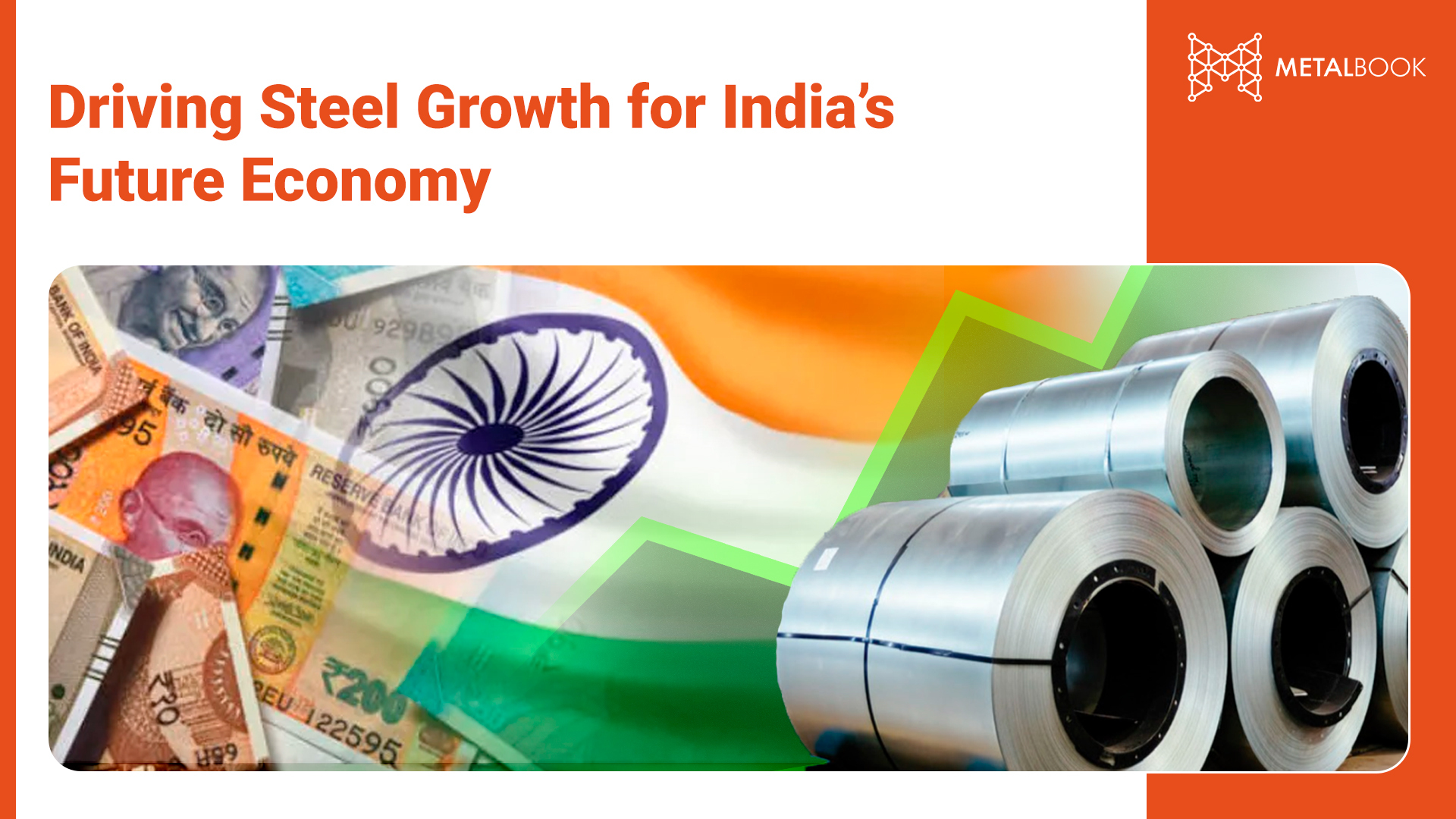
The Indian steel sector is undergoing a significant long-term transformation, which is likely to be critical in the achievement of the country's 2047 goals. Steel will be a core indicator for the industrial strength, economic growth, and infrastructure development. This transformation is not limited to increased production but will also require reevaluating the entire steel ecosystem for supporting a contemporary, multifunctional economy. Currently, the Indian steel industry is estimated at 170 million tonnes and is projected to reach close to 500 million tonnes by 2047, highlighting the dual aspects of scale and sophistication.
Expanding Demand and Economic Linkages
The expansion of India's economy is linked tightly to demand in steel. As it strives towards a $15 trillion economy, there will be an increase in per capita consumption of steel, from around 120 kg to more than 300 kg. This is representative of the transition from a construction-dominated economy to a manufacturing, mobility, energy and advanced industry-based economy. Rising incomes and urbanization, as well as the investment in infrastructure, will all continue to push growth, but the type of consumption is also expected to change significantly.
Changing Consumption Patterns
Steel usage across sectors is going through a structural change. Although construction will continue to account for a large part of total steel consumption (in absolute terms), construction’s share of total steel consumption will gradually decline, while electric vehicles, increasing railways and metro networks, and expanding solar and wind infrastructure will increase demand for specialized steel products in engineering, capital goods, automotive, and renewable energy sectors. In addition, strategic sectors such as defence and aerospace are looking for higher-grade alloys and advanced materials, which has resulted in a shift towards value-added steel production.
Productivity and Technology Transformation
Technology is changing the way steel is made in India; manufacturing productivity can increase by nearly 30%, resulting in production per worker increasing from about 700 tons to almost 1000 tons per year. The productivity growth will be driven by the introduction of automation, AI and digital processes within new steel-making plants. As real-time monitoring, predictive maintenance and data-driven decision-making become more prevalent, the evolution of steel-making facilities will move from traditional plants to "Smart" or Technology-Enabled Industrial Systems.
Employment and Industrial Ecosystem Impact
The steel sector is going to keep generating a lot of jobs because of how many industries it connects to. This includes mining, logistics, engineering, fabrication, building infrastructure, and recycling beyond just making steel. By 2047, there are going to be almost 5-6 million direct and indirect forms of employment tied to the steel industry. However, the types of jobs will change, and there will be a greater demand for highly skilled staff who possess technical skills and have experience using digital devices.
Building Competitive Advantage: The System Approach
The Indian Steel Industry must better mesh diverse systems to become competitive in tomorrow's market. This will be accomplished by using multiple methods of production: blast furnaces, EAFs, DRI production, and hydrogen-based processes. The steel industry must also advance in manufacturing values by producing automobile steels, electrical steels, and high-performance alloy steels. Sustainability will be crucial to the steel industry's future. Key elements will include increased emphasis on reducing CO2 emissions, recycling scrap materials, and using renewable energy sources. Logistics operations will need to be efficient and include the use of coastal shipping, freight routes, and combined supply chains. In addition to these efforts, technologies that allow for the use of Artificial Intelligence to enhance decision-making will be commonplace across the value stream and throughout the entire production process.
At present, logistics costs in India remain higher than global standards, and the cost-competitive nature of the steel industry is adversely affected directly due to these high logistics costs. Recent initiatives aim to improve these inefficiencies, including the development of multi-modal infrastructure, the implementation of digital platforms like ULIP and National Logistics Policy, which have a goal of significantly lowering these inefficiencies through more efficient supply chain management. Supply chains for steel will benefit from improved integration and increased technology use, thus making the supply chain faster, more reliable and cost-efficient, thereby strengthening the entire ecosystem in which it operates.
Alongside this, digitalization will act as a backbone, enabling AI-driven operations and real-time decision-making across the value chain.
Raw Material Backbone: Coal, Iron Ore and Supply Security (2026 Update)
A critical pillar of India’s steel ecosystem is the availability and efficiency of raw materials—especially coal and iron ore .
Coal: Stable but Moderating Growth
India's coal production reached 100.51 MMT in February 2026, with dispatch of 90.8 MMT indicating a 6% increase YoY and a 1% decrease MoM. The expansion was the aggregate of total coal production in January to February, 2026, totalling 208.48 MMT (2.80% increase YoY), and output for FY 2025-2026 (April to February), totalling 930.2 MMT with a marginal increase relative to 2025 of 0.1% YoY.
Coal India Limited's production was 74.67 MMT in February with total output of 683.6 MMT (approximately 2% lower YoY), while output from SCCL has decreased dramatically (by approximately 39%), and production from both Captive and existing companies is growing significantly (up 23% YoY), totalling 21.94 MMT.
Insight: India's coal economic model continues to move away from PSU dominance and develop into a more diverse structure of mining.
Iron Ore: Strong Growth with Emerging Supply Gaps
Iron ore production, especially by NMDC Limited, has gained substantial momentum in 2026:
• February 2026 production = 5.35 million tonnes (YoY increase of ~15% to 16%)
• January 2026 production = 5.56 million tonnes (YoY increase of ~8% to 9%)
• FY 2025-26 production through February 2026 = ~47.79 million tonnes (YoY increase of ~18%)
• FY 2025-26 production = ~50 million tonnes (record high)
• Total iron ore production in India is estimated to be ~300 million tonnes/year
• However, there are significant imports (for FY2026 import prediction: ~12-14 million tonnes) due to a lack of supply in high-grade ore
Insight: Despite its vast mineral wealth, India's challenge lies in high-quality versus low-quality material (which is essential for producing high-quality steel).
Other Key Raw Materials: Emerging Strategic Focus
A number of additional materials besides coal and iron ore are becoming more focal points than before. These include:
- Coking Coal: India (structural dependency) sources about 85% of its coking coal from imports
- Scrap Steel: Increasing use of Electric Arc Furnace (EAF) production and push towards a circular economy is making scrap steel more important
- Limestone and Dolomite: Necessary for fluxing in steelmaking ; supplied sufficiently
- Critical Minerals (Rare Earth Elements): These minerals are becoming increasingly important to the future of steel-related technologies and energy transition; the Government of India is implementing various initiatives through NMDC Limited in this area.
Insight: The steel industry is moving towards multi-material resources (e.g., not just iron ore or coking coal).
Industry in Action: The Ecosystem Model
Tata Steel and JSW Steel are ahead of these market changes already. The focus of their business strategies has moved, and continues to shift, from producing steel solely as their core business, to building integrated ecosystems that include not only their steel manufacturing processes, but also a diversified product portfolio of high value steel products and sustainability initiatives and introducing digital technologies into steel manufacturing. In addition to increasing and expanding capacity, they are also developing new ways to manufacture and deliver steel as part of the modern economy.
The Road to 2047
The transformation of India's Steel Sector will take place in phases . Phase one involves creating new production capacity, many bottlenecks; phase two is connecting all the various production components (technology, quality control systems, etc.) and creating value-added products; and phase three will be India’s place as a world leader in Sustainable & Advanced Steel Production.
The Logistics Ecosystem will also undergo a similar transformation—from stand-alone infrastructure development to fully-Integrated-Multi-Modal Networks (e.g. connecting roads, railways, ports, and warehousing). Integration of these elements will also be critical in the growth of the Steel Industry, as the efficient flow of Raw Materials and Finished Goods will have a direct impact on the overall scale, speed and global competitiveness of the steel sector. The success of this transformation will require collaboration among all participants in the Ecosystem (including the Steel Sector, Logistics Providers, Policy Makers and stakeholders).
Conclusion
India's steel sector is shifting from standard levels of expansion into a phase of transformation across systems. The success of the steel industry in the future will not be limited to the quantity that is produced, but instead by the degree to which it can be integrated into the wider economy with efficiency and sustainability, as well as smartly.
The combination of raw materials and logistics will help to determine the competitiveness of this industry. There are currently stable levels of coal production and very high levels of growth in iron ore production, but the quality, availability of imports, and efficiency of supply chain processes will all contribute towards this next phase of growth.

Frequently Asked Questions
Everything you need to know about the product
Related Articles
Floating Solar in India: What the 102 GW Potential Means (2026)
Copper: The Quiet Critical Mineral — Why Global Demand Is Rising and What It Means for India
Solar Balance of System (BOS) Costs in India (2026)